Apple Watch Series 12 and Ultra 4 Bring a New Health Sensing System
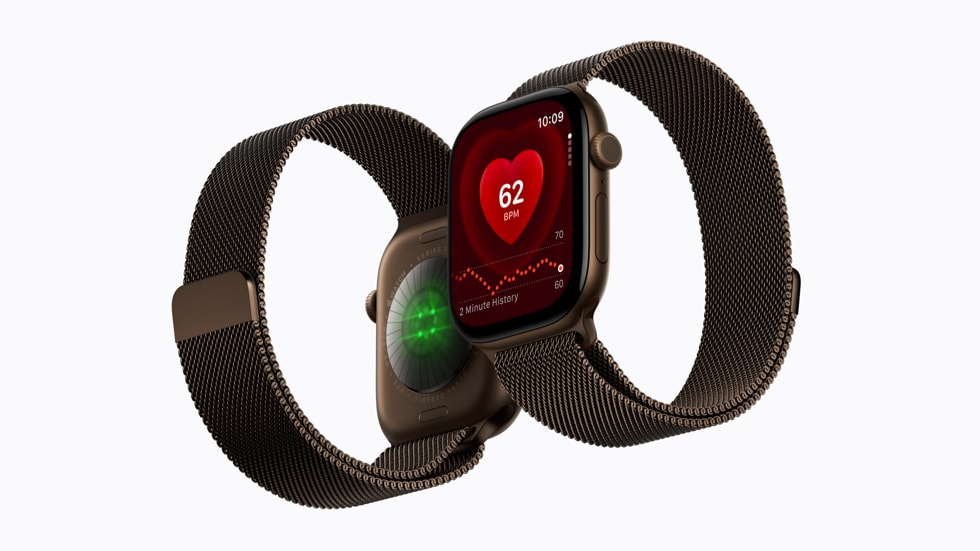
Apple used its September event to refresh both ends of the watch range, and the through-line is health data. Apple Watch Series 12 and Apple Watch Ultra 4 share a new hardware package that Apple calls the Health Sensing System, a fresh S11 chip, and a set of audio and readiness features designed to make the numbers on your wrist more useful. Both were announced on September 9 and went on sale on September 18. Here is a clear-eyed look at what is new, what is still beta, and who benefits.
What the Health Sensing System actually is
The new system combines three hardware changes: redesigned optical heart sensors with larger, more power-efficient green LEDs, a new set of electrical heart sensors, and a built-in microphone that feeds the audio features described below. Apple's claim is that the result is the most accurate heart rate sensing in a wearable. The company backs that with an internal study, comparing best-selling wearables as of June 2026 across more than 1,000 participants. It is a manufacturer-run comparison, so treat it as a claim to be tested rather than a settled fact, but the underlying change is easy to describe: the watch now samples heart rate every five seconds throughout the day.
That denser sampling matters because most of the value of a heart-rate trace is in the detail. Heart rate variability, or HRV, is measured up to 24 times more often than on previous models, and Apple splits it into two views: a Recovery HRV that reflects daily stress and recovery, and an Overall HRV that gives a broader cardiovascular picture. Both surface in overnight vitals and in a new daytime vitals section. If you already track a fitness band, our guide to how the popular fitness trackers measure recovery shows why a metric like HRV needs a lot of data before it says anything useful.
Readiness: a single score, with caveats
The most visible new software feature is Readiness, a daily 0 to 10 score built from recent activity, training load, vitals and sleep. Rather than leaving you to interpret four charts, the watch offers one of four recommendations: Recover, Pace Yourself, Ready or Go For It. The score updates through the day as new data arrives, and Apple says the algorithm was developed with the Apple Heart and Movement Study together with exercise scientists and physicians.
One-number scores are convenient and easy to over-trust. Use it as a prompt to think about your day, not an instruction. If it says to recover after you slept badly and you feel fine, your own judgment still matters. The real test will be whether the recommendations stay consistent and explainable over several weeks, which is something only living with the feature can answer.
Step counting has also been rebuilt with a new pedometer model and machine learning, and Apple claims the most accurate step tracking of any smartwatch. A new Steps complication puts the live count on a watch face, and a new heart rate complication does the same for beats per minute.
S11 and the new Audio Intelligence features
Both watches use the S11 chip, described as Apple's most powerful wearable chip. It powers the sensing pipeline and a new group of microphone-driven tools called Audio Intelligence, which arrive in beta later this year and require an Apple Intelligence-capable iPhone 16 or later, excluding the iPhone 16e. They are not initially available in the European Union.
- Sound Recognition alerts deaf and hard-of-hearing users to sounds such as sirens, alarms, doorbells and a baby crying, without an iPhone nearby.
- Live Rewind lets you double-press the Digital Crown to see the previous 15 seconds of a conversation as text.
- Siri Recap creates conversation summaries with titles and key points inside a new Siri app.
- Shazam identifies music faster and shows the result in a Smart Stack widget.
Anything that listens raises privacy questions, and Apple's answer is architectural. Audio is processed inside a hardware-isolated compartment on the S11 called the Secure Exclave, no recording is made or stored, and raw audio is described as inaccessible to the operating system, apps, users and Apple itself. Live Rewind plays an audible chime and shows a microphone indicator, summaries leave out sensitive items such as financial data and government IDs, and the summaries and snippets are end-to-end encrypted when synced through iCloud. The watch does not attribute speech to individual speakers. This is a design claim, not an audit result, but it is a considered one. For more on why on-device processing changes the privacy equation, read our explainer on on-device AI.
Series 12: materials and battery
Series 12 comes in 42mm and 46mm cases. Aluminum finishes include dark bronze, black, light gold and space gray. Titanium is offered in natural and a new radiant gold, and a ceramic option appears in pearl white and a new night blue. Aluminum models use Ceramic Shield 2, which Apple says is 60 percent tougher than the Ion-X glass on previous aluminum watches.
Battery life stays at up to 24 hours for everyday use, but the company says outdoor-workout endurance improved 25 percent to up to 10 hours, and that 15 minutes of charging now delivers up to 12 additional hours, a 50 percent improvement. Pricing starts at $399. The design story here is less dramatic than the thin redesign we covered in our look at the Series 10, and the case for upgrading rests on the sensors and features, not the shape.
Ultra 4: two-day endurance and satellite features
Apple Watch Ultra 4 starts at $799 in natural or black titanium cases. Apple quotes up to 50 hours of everyday battery life, up to 84 hours in Low Power Mode, up to 25 hours in Extended Workout mode and up to 45 hours in Max Extended Workout mode, with 15 minutes of charging giving up to 18 hours. It carries satellite messaging, Emergency SOS and Find My, with two years of satellite service included with activation, plus what Apple calls the most accurate on-device GPS for sports watches. To understand what those satellite features can and cannot do, see our comparison of satellite SOS on phones. New bands include the Trail Loop, Alpine Loop and translucent Ocean Bands, and a Hermès edition gets a new Grand H titanium band.
watchOS 27 and the redesigned Health app
The watches run watchOS 27, available for Series 9 and later, SE 3 and Ultra 2 and later from September 14. It brings an app grid with five Siri-suggested apps, a single-hand tap gesture in the Smart Stack, and perimenopause and menopause support in Cycle Tracking. A new Siri app and Siri Modular watch face arrive with Siri AI in beta, in English at first and in more languages in October.
On iPhone, a redesigned Health app is coming later this year in U.S. English first, with a Longevity tab that includes a Health Age feature, an Insights tab that summarizes what has changed, and movement evaluations that use vision-based AI and heart rate data to assess flexibility, strength and balance. Apple also lists a lab-testing option at Quest Diagnostics locations in the United States: more than 50 biomarkers for $119. Consumer health features like this are not diagnostic tools, and it is sensible to treat any surprising number as a reason to talk to a clinician, not to self-diagnose.
Should you upgrade?
If you own a Series 9 or newer and mostly use the watch for notifications and workouts, the upgrade case is modest and you can safely wait. The people who gain the most are those who track recovery seriously, wear the watch to sleep, or care about Sound Recognition and Live Rewind and already own a compatible iPhone. Ultra shoppers should weigh the 50-hour claim against how they really use the device; if your multi-day trips involve satellite messaging, the two years of service matter as well. If you are choosing between platforms rather than generations, our ecosystem comparison of Apple Watch and Galaxy Watch is a good place to start. Whichever you choose, check which of the new features are marked beta or region-limited for your country before you pay.