Apple TV 4K and HomePod mini 2 Add Siri AI
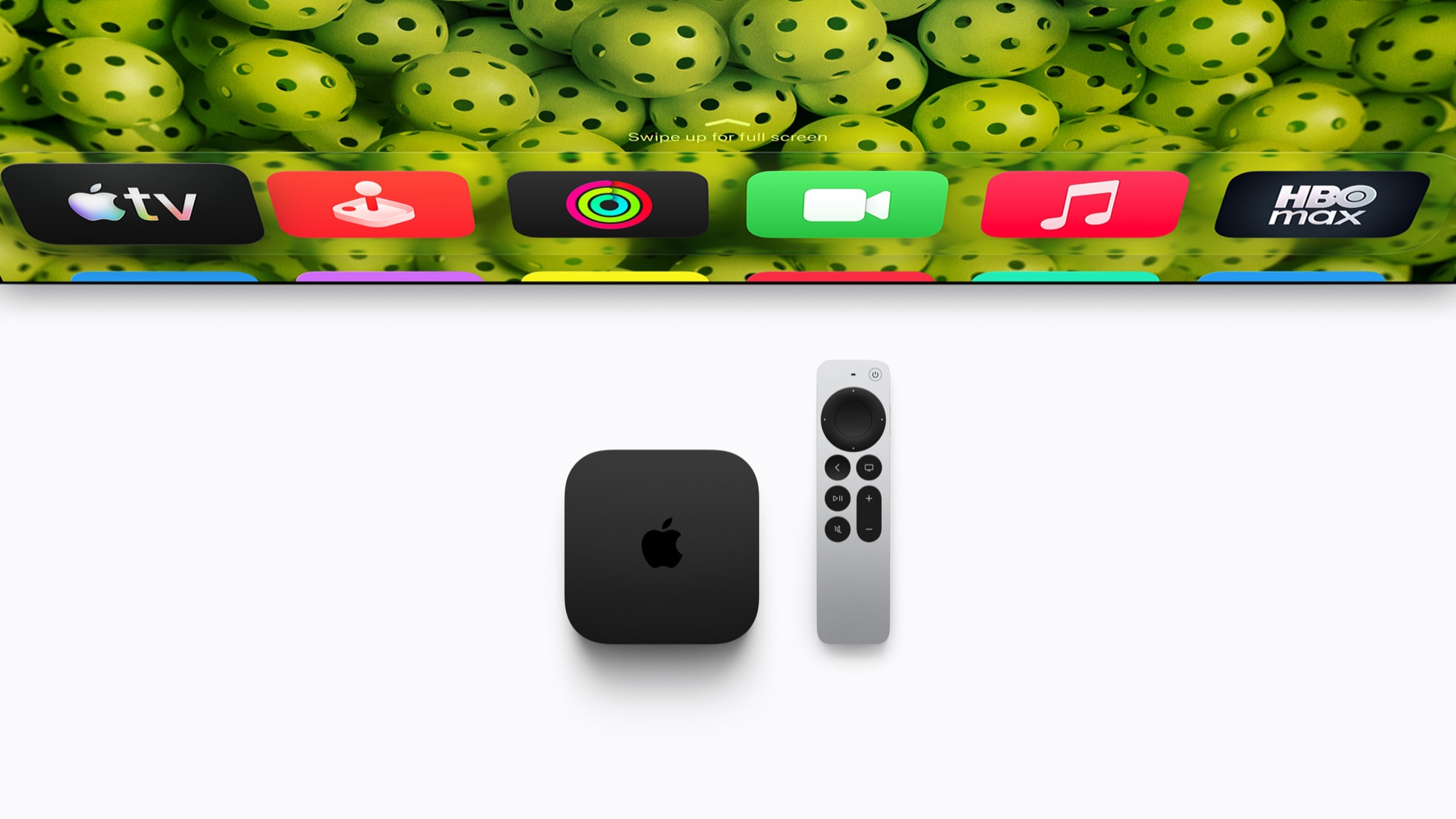
Apple used October 13 to refresh the two devices that sit at the center of its living-room strategy. The company announced a new Apple TV 4K (4th generation) priced at $299 in the United States and a HomePod mini 2 priced at $149, and it tied both to Siri AI, the rebuilt version of its assistant that it describes as more conversational and more personal. Both products can be pre-ordered now. This guide walks through what Apple says is new, what is still a promise rather than a shipping feature, and what you should check before you spend money. For a quick reference to this page, here is our Apple TV 4K and HomePod mini 2 launch breakdown. Everything below is drawn from Apple's own newsroom announcements, and where the company has not given a detail, we say so.
The headline: two devices, one assistant
The two announcements are really one story. Apple says the new Apple TV 4K brings Siri AI to the television through a full-screen experience, while HomePod mini 2 brings the same assistant to a small speaker that doubles as a smart home hub. The company also says the pair can work together for the first time as part of a four-speaker surround setup. Apple positions this as part of a wider home push that includes a new HomeView display and a line of third-party-built accessories called Apple Home Collection, which we cover separately.
The timing differs by product. According to Apple, the Apple TV 4K can be pre-ordered starting October 13 with in-store availability beginning Friday, November 13, in the U.S. and 29 other countries and regions. HomePod mini 2 can also be pre-ordered now, with availability beginning Friday, October 30, in the U.S. and more than 23 other countries and regions. If you want the speaker first and the box later, that is the order Apple has chosen.
What is new on Apple TV 4K
The new box is built around an A19 chip. Apple says that chip delivers up to 50 percent faster CPU performance and up to 2x faster GPU performance than the previous generation, and that it adds a dedicated AV1 decoder for more efficient streaming that uses less bandwidth. Those are Apple's own comparisons against its prior model, and the company does not give benchmark conditions on the page, so treat them as directional. In daily use the practical outcomes Apple points to are quicker navigation and smoother animations.
The more visible change is voice. Apple says the device now has three far-field microphones, so you can say "Hey Siri" or "Siri" without picking up the remote, and that advanced echo cancellation helps it hear you while audio is playing. The Siri Remote keeps its familiar look but gains Find My support with Precision Finding and an option to play a sound, which is a small but welcome fix for anyone who has lost a remote in the sofa. Apple notes that Precision Finding works on the 4th-generation remote when paired with certain recent iPhones, and that playing a sound is exclusive to the newest remote.
Siri AI on the television is described as a full-screen, conversational experience. Apple gives examples such as asking which Apple TV shows won Emmy awards this year and seeing poster art with follow-up suggestions, or asking a question about a show while it plays and getting a compact overlay so the picture is not interrupted. With an Apple Intelligence-enabled iPhone, the company says Siri AI can use personal context, for example to play a show a friend recommended. Apple also says Siri AI is available as a beta on Apple TV 4K (2nd generation or later), which matters if you own an older box and are wondering whether you need new hardware just for the assistant.
HomePod mini 2: color, sound and a home hub
HomePod mini 2 arrives in five colors: pink, green, blue, white and midnight. Apple says it uses the S10 chip and computational audio to analyze music in real time and tune dynamic range, loudness and acoustic performance, and that it can be used alone, as a stereo pair or in multiroom audio. It can also act as the speaker for a Mac, and Apple adds a visual feature called Sound Glow, where the top of the speaker glows and pulses in sync with music and uses album artwork colors.
The smart home features are where the speaker earns its keep. Apple says HomePod mini works as a home hub so you can control accessories from the Home app on iPhone whether you are at home or away. Sound Recognition listens for smoke or carbon monoxide alarms and sends a notification to iPhone, iPad and Apple Watch, and Apple is careful to say this should not be relied upon in high-risk or emergency situations. Apple also says the speaker can recognize up to six household voices once Siri AI is active and can use Face Recognition announcements with compatible video doorbells and cameras that have HomeKit Secure Video turned on.
One important caveat: Apple says Siri AI will come to HomePod mini 2 in a future software update, in English, in the U.S., Australia, Canada, India, New Zealand, Singapore, South Africa and the UK. So the headline feature is not on the speaker at the moment it ships.
The four-speaker surround claim
For the first time, Apple says, you can build a four-speaker surround sound setup with the new Apple TV 4K and HomePod mini 2. The speakers work with the box to work out where each one sits in the room, and audio timing and levels are calibrated automatically. A larger HomePod (2nd generation) can be used in the same arrangement, provided the front and rear pairs match. Apple's fine print adds that the setup requires four speakers in matching pairs and the latest software.
Do the math before you get excited. Four HomePod mini 2 speakers at $149 each come to $596 before tax, on top of the $299 box. That is a real investment compared with a single soundbar, and Apple does not publish measurements comparing the experience with a conventional surround system. If you care about movies, plan to listen in your own room before committing to the full four-speaker route.
Privacy and the cloud
Apple says Siri requests on both devices can be handled on the device or through Private Cloud Compute, and that data processed in Private Cloud Compute is not stored or made accessible to Apple or anyone else. On Apple TV 4K the company says microphone data is handled in a separate protected runtime called Secure Exclaves. HomeKit Secure Video footage is described as end-to-end encrypted. These are company claims about architecture; they are not an independent audit, but they are the commitments you are being asked to accept.
Who is this for
The new Apple TV 4K makes the most sense for households already invested in iPhone and Apple services who want a faster box with hands-free voice. If you own a 2nd generation or later Apple TV, Apple says you can try Siri AI in beta without buying new hardware, so the upgrade case rests on the A19 speed, the microphones and the surround option. HomePod mini 2 suits anyone who wants an affordable room speaker that doubles as a hub, especially if you use Apple Home accessories and like the idea of voice control for locks, lights and thermostats.
If you do not use an iPhone or iPad, a lot of the personal-context promise disappears, because Apple says many Siri AI features rely on an Apple Intelligence-enabled device in the home.
What to check before buying
- Region and language. Apple lists the countries where Siri AI is available in English at launch. It also says Siri AI will not be initially available in the EU on iOS and iPadOS, and that far-field microphone support varies by region and language.
- Your phone. Personal-context features need an Apple Intelligence-enabled iPhone or iPad running the latest software, with Siri AI turned on.
- Software timing. The Apple TV 4K release lists Siri AI as a beta in tvOS 27.2, and HomePod mini 2 gets Siri AI later by update. Ask whether you are paying for something that arrives after delivery.
- Cost of surround. Four matching speakers are required. Price the whole system, not just the box.
- Camera features. Video descriptions for HomeKit Secure Video require an eligible iCloud+ plan and setup with an Apple Intelligence-enabled device, and Apple says some features are limited to a certain number of cameras depending on the plan.
- Usage limits. Apple notes certain server-based Apple Intelligence features have daily limits and that expanded access may be offered for a fee in the future.
Weak points and open questions
Apple's announcements are light on independent performance data. There are no stated battery, thermal or audio measurements, and the surround claim is qualitative. We also do not know from the announcement how well Siri AI performs on these devices day to day, since reviewers have not yet tested production units. Finally, the installment price of $49.83 per month for six months applies only to the television box through Apple Card Monthly Installments in the U.S. and is subject to credit approval.
Bottom line
This is a coherent update: a faster Apple TV 4K with far-field microphones, an inexpensive speaker in new colors, and one assistant that Apple wants to live in both. The strongest new idea is the four-speaker surround setup, and the biggest risk is paying now for Siri AI features that are in beta or arrive by update. If you are an iPhone household in a supported region, the lineup looks like a sensible upgrade path. If you are outside those regions or outside the Apple ecosystem, wait for hands-on reviews before you pre-order.