Samsung Galaxy Watch Ultra2 and Watch9: Bigger Batteries and a Snapdragon Wear Elite Chip
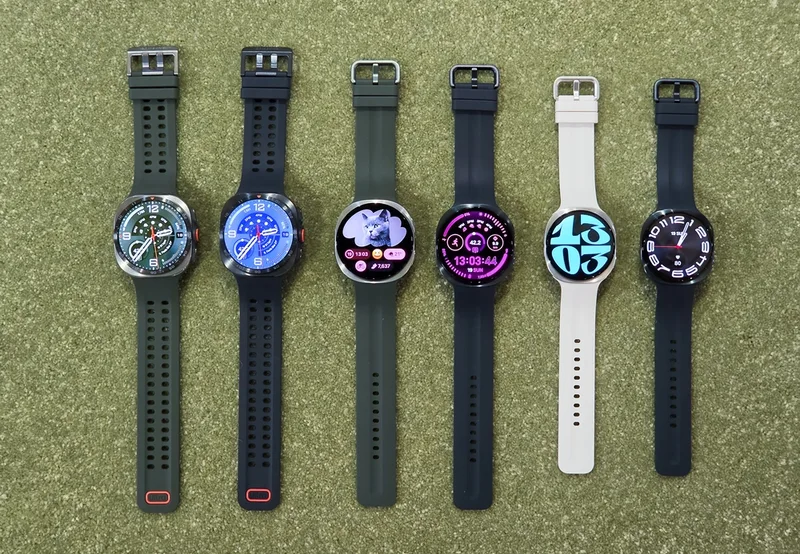
Samsung used its Galaxy Unpacked event in London on July 22 to introduce two new smartwatches: the rugged Galaxy Watch Ultra2 and the everyday Galaxy Watch9. Both move to a new Qualcomm platform, both grow their batteries and both lean on an updated Samsung Health app, but they are aimed at very different wrists. Samsung has not put a price in its launch write-up, so this piece sticks to what the company did say about hardware, health features and the way the two models are positioned.
Galaxy Watch Ultra2: built for training and the outdoors
The Ultra2 is Samsung's answer to people who train hard, run trails and dive. It is the first Galaxy Watch to use the Qualcomm Snapdragon Wear Elite platform, which Samsung credits for quicker performance and more precise GPS tracking. It comes in one 47-millimeter size, and the battery is an 800mAh cell that the company says is 35 percent larger than the previous generation's.
That larger battery did not come at the cost of bulk. Samsung says the redesign, which includes a cushion-style shape that blends the display, bezel and body, made the watch 12 percent thinner than before. The band uses a new air-pocket structure and is 26 percent lighter. Comfort is a practical concern for a sport watch that is worn through sleep, long races and hot days, and slimming a device while adding battery capacity is the kind of engineering trade-off that customers notice quickly.
The display reaches up to 5,000 nits of brightness, which Samsung describes as a first for a smartwatch. As with any outdoor watch, peak brightness only matters in direct sun, but that is exactly where small screens struggle. It is a good reason to try the watch outdoors before you buy.
Trail Run, diving and hydration
The Ultra2 adds a feature exclusive to it called Trail Run. It surfaces detailed elevation data, climbing progress and cumulative ascent and descent, so a runner can judge effort against the terrain and adjust pace. Trail runners usually care more about vertical gain than distance, so a feature that puts that information front and center is a sensible addition.
Underwater support has been extended as well. When the wearer enters the water, the watch automatically records depth, dive time and water temperature. Samsung backs the claim with EN13319 certification for diving instruments, 10ATM water resistance and an IP69K rating for dust and water. Working with the dive-equipment brand Mares, the Ultra2 will also support advanced diving features such as real-time ascent and descent rates and safety decompression time. Samsung notes that these features are available later this year and need a separate app download. If you dive, that caveat matters: do not plan a trip around a feature that has not shipped.
A new hydration guidance addition to Nutrition Alert calculates recommended fluid intake in real time from sweat loss relative to body weight during long workouts. It is easy to overlook, but hydration and fueling are often what decide a long event, and an in-workout prompt could be more useful than a chart afterward.
Galaxy Watch9: everyday health on the wrist
The Watch9 is the mainstream model. It comes in 40- and 44-millimeter sizes, uses the same Snapdragon Wear Elite platform, and has a 390mAh battery in the 40mm version that Samsung says holds 20 percent more than the previous generation's. The body and band are slimmer, with the same air-pocket band structure as the Ultra2, for all-day and overnight wear. The company positions it as an everyday companion for sleep, cardiovascular health, exercise and recovery, rather than as a sports instrument.
Both watches are tied closely to the updated Samsung Health app, which Samsung frames as an all-in-one health coach organized around five pillars: Activity, Mindfulness, Nutrition, Sleep and Vitals.
Health features worth knowing about
- Sleep Apnea now analyzes the number of breathing disruptions per hour with an AI algorithm and sorts them into three levels. It builds on the detection capability that earned Samsung the first FDA De Novo authorization for such a feature in 2024.
- Vitals pulls together heart rate, heart rate variability, respiratory rate, skin temperature and blood oxygen saturation measured during sleep to create a personalized baseline and highlight meaningful changes.
- Heart Health Score combines activity, sleep, body composition and stress trends into a single cardiovascular snapshot.
- Fitness Index uses body composition and workout history to judge whether your training volume suits you, and Daily Cardio Load helps gauge training balance and recovery time.
A caution applies to all of these. Scores and baselines are useful for spotting trends, not for diagnosing conditions. The wellness features on a watch complement, and do not replace, medical advice. For readers who want to understand the sensors behind such scores, our guide to how fitness trackers turn body signals into scores gives helpful background.
How the two models differ in practice
Samsung's own framing is neat: the Ultra2 excels in high-intensity training and the Watch9 supports everyday health management. Hardware overlaps are considerable. Both use the same chip platform and both benefit from bigger batteries, so the choice is about size, ruggedness and the specialized features. Choose the Ultra2 if you dive, run trails, need the brightest screen possible or simply prefer a large, tough watch. Choose the Watch9 if you want a slimmer watch that focuses on sleep, heart health and general fitness.
Where it sits in the Galaxy ecosystem
The watches were part of the same event as the company's latest foldables. If you are considering a whole-Galaxy setup, our look at the foldable phone landscape is a good companion to this launch, and we cover what smartwatches from different ecosystems can and cannot do together in our Apple Watch versus Galaxy Watch comparison. As with most smartwatches, the deepest integration comes when your phone comes from the same maker, so factor that in before choosing across ecosystems. Samsung's own phone-side software direction is outlined in our explainer on Galaxy AI features that actually matter.
What to check before you buy
Since Samsung's launch write-up did not list prices or release dates, look at local retail listings for both once they appear and compare storage and connectivity variants, which the announcement did not detail. Verify that the features you want, especially the Mares diving functions, are actually live for your region and phone. And remember that battery numbers, such as the 390mAh figure, are for the 40mm Watch9 specifically; the larger 44mm model may differ. In short, the Ultra2 is the specialist and the Watch9 the generalist, and both look like sensible steps up for Galaxy users whose current watch is aging.