Framework Laptop: What "Actually Repairable" Means in Practice
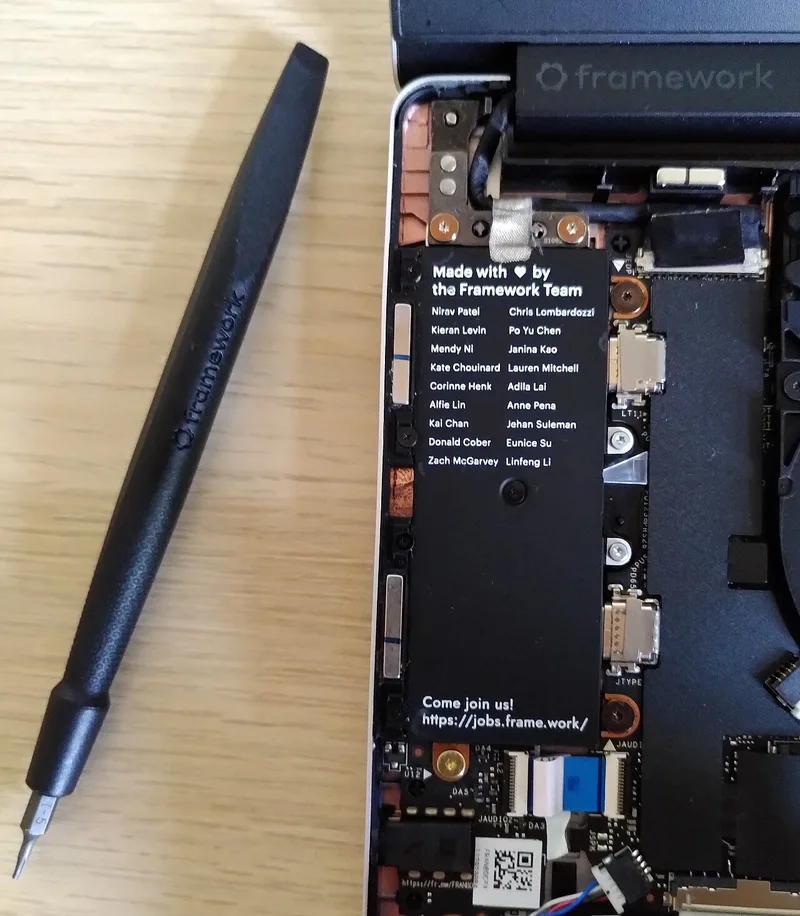
Most modern laptops treat internal components as effectively sealed — batteries glued in, RAM soldered down, storage locked to a proprietary form factor. The Framework Laptop is built around the opposite premise: every major component, including the mainboard itself, is a user-replaceable module secured with standard screws, and Framework publishes official repair guides for each one.
The most distinctive piece of the design is the Expansion Card port system — instead of a fixed set of USB-A, USB-C, HDMI, and SD card ports soldered to the mainboard, the laptop has slots that accept small swappable modules. Need an extra USB-C port for a trip and an HDMI port at your desk? You physically swap which cards are inserted, rather than carrying a dongle.
Framework also sells mainboard upgrade kits separately from the rest of the laptop, meaning a several-year-old Framework chassis — keyboard, screen, and body — can get a new processor generation without replacing the whole machine, and Framework has documented pathways for the older mainboard to be repurposed into a standalone mini-PC rather than discarded.
None of this makes the Framework Laptop the fastest or thinnest option in its price range — it's a genuinely good but not category-leading machine on raw specs. The entire value proposition is the multi-year repairability and upgrade path, which matters most to buyers who've been frustrated replacing an otherwise-fine laptop over one failed component, or who care specifically about the reduced e-waste of a repairable design.