NVIDIA RTX Spark: Local AI for Windows Laptops
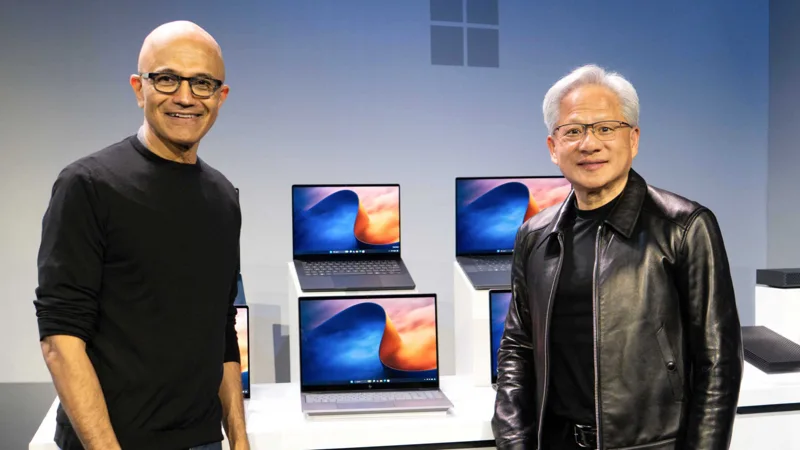
On October 7, at a Microsoft event in San Francisco, NVIDIA and Microsoft laid out a plan to make Windows PCs the home for local AI agents. The centerpiece on the hardware side is NVIDIA RTX Spark, a chip platform for Windows laptops and compact desktops that pairs a Blackwell RTX GPU with an NVIDIA Grace CPU and up to 128GB of unified memory. According to NVIDIA, laptop pre-orders opened that day, laptops go on sale Friday, October 16, and compact desktops follow in November. Microsoft also introduced a laptop called Surface Laptop Ultra built around the chip. This guide sorts the confirmed details from the open questions and tells you what to check before you buy. A short pointer to this page is our RTX Spark Windows laptop guide. The facts below come from NVIDIA's official blog post about the event; the figures are NVIDIA's claims, and no independent testing has been published.
What RTX Spark is
NVIDIA describes RTX Spark as a platform that puts its full AI software stack into Windows laptops and small desktops. The hardware combines an NVIDIA Blackwell RTX GPU with up to 6,144 cores and an up-to-20-core NVIDIA Grace CPU, connected at 600 GB/s. NVIDIA quotes one petaflop of FP4 AI performance and up to 128GB of unified memory. The key idea is that the CPU and GPU share one large pool of memory, which is what lets a laptop hold models that would not fit in the dedicated video memory of a typical gaming laptop.
NVIDIA says RTX Spark runs the full CUDA platform, the same software stack used across its hardware, so developers can move models, tools and workflows without rewriting them and run the same stack from RTX Spark to its DGX Station. For creators, the company lists fifth-generation Tensor Cores with NVFP4 support, hardware-accelerated AV1 and 4:2:2 video encode and decode, DLSS and RTX ray tracing. For gamers, NVIDIA says the platform can run AAA games at 1440p above 100 frames per second with DLSS 5, Reflex and G-SYNC. That is a company claim about unnamed games and settings, so treat it as a marketing target and wait for tests.
The Microsoft side: agents on Windows
The event was not only about chips. Microsoft announced general availability of Microsoft Execution Containers, or MXC, which it describes as operating-system-level infrastructure that lets AI agents run safely and persistently in the background under OS control. In NVIDIA's account, Microsoft's Pavan Davuluri said the goal is for agents to be secured, observed and governed, and Satya Nadella said the desktop needs to be the most secure place for agents to run. For ordinary buyers, the practical question is whether the software features you want actually exist on day one, not only the hardware.
NVIDIA CEO Jensen Huang framed the moment in terms of history, saying Windows was at the core of NVIDIA's journey, and argued that an agent running on your own computer becomes a personal assistant. Those are views from the keynote, not product specifications.
Surface Laptop Ultra and partner systems
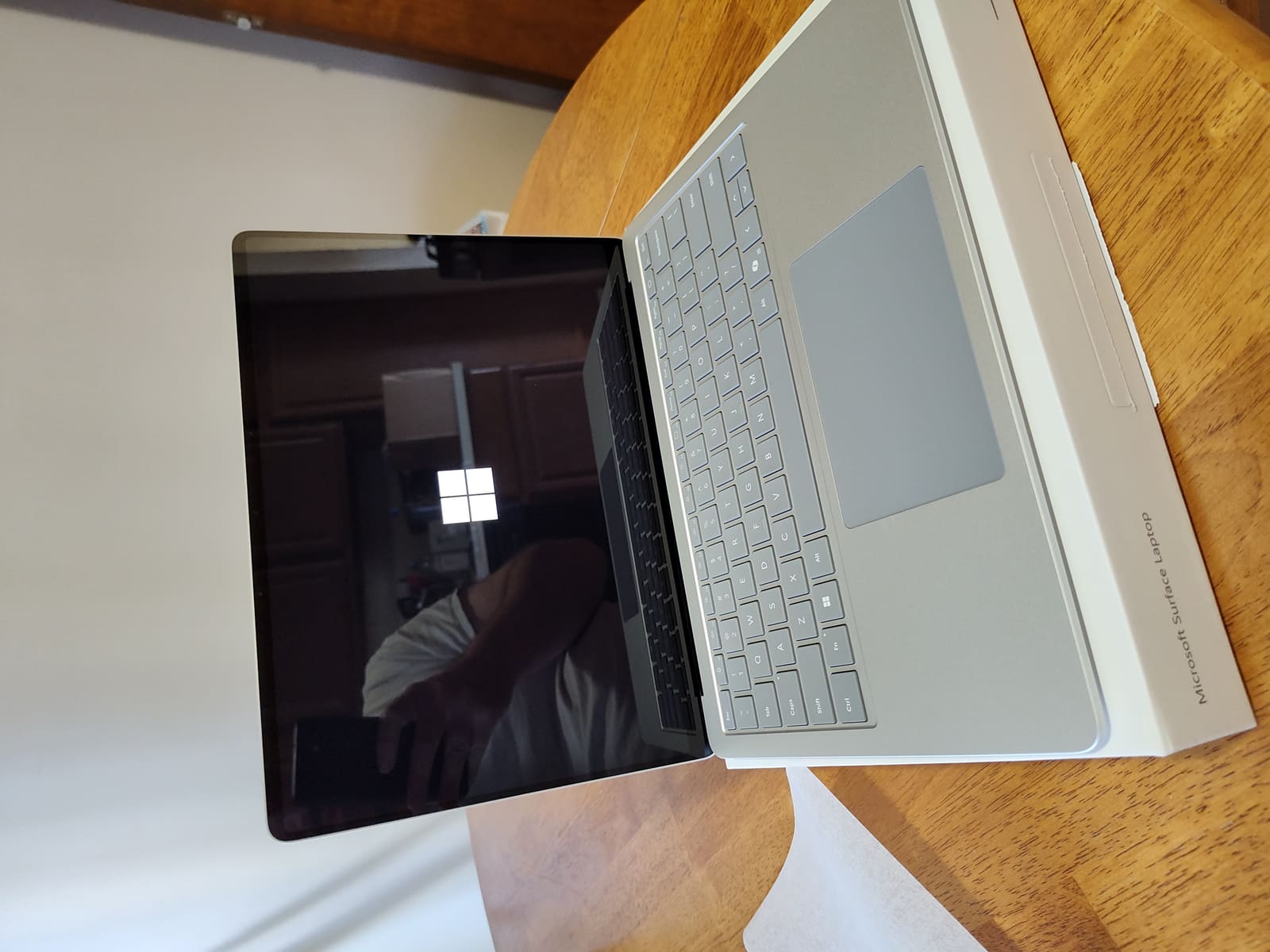
Microsoft introduced Surface Laptop Ultra, which Davuluri said was built around RTX Spark, with up to 128GB of unified memory and up to a petaflop of AI compute. NVIDIA says systems are coming from Acer, ASUS, Dell, HP, Lenovo, Microsoft, MSI and Gigabyte, with designs ranging from slim laptops to compact desktops built for always-on agents. The announcement does not list prices, screen sizes, battery estimates or the specific configurations of any laptop, so none of those can be assumed. If you plan to buy, check the maker's own product page for the exact memory and GPU configuration, because "up to" figures describe the top of the range, not every model.
Local AI: what the memory enables
The selling point is running models locally, unmetered and without sending data to the cloud. NVIDIA gives one example, saying RTX Spark can run a model called Qwen 3.8 Flash Next, described as a 125B model with 51B n-gram, that the company says matches the intelligence of many cloud models. We cannot verify that comparison and NVIDIA does not provide benchmark conditions on the page. The general principle is sound, though: the size of a model you can run locally is limited mostly by memory, and 128GB of unified memory is far more than most laptops can offer to a GPU.
Speed still matters. A large model that fits in memory can still be slow if memory bandwidth is limited, and the announcement does not state memory bandwidth for the unified pool. That is one of the most important numbers to look for in reviews.
DGX Station for Windows
NVIDIA also previewed DGX Station for Windows, described as the first deskside AI supercomputer to bring GB300 Grace Blackwell-class infrastructure into the Windows ecosystem. It runs on the GB300 Grace Blackwell Ultra Desktop Superchip, with 748GB of coherent memory and up to 20 petaFLOPS of FP4 AI compute, which NVIDIA says is enough to run models up to a trillion-parameter scale locally. Until now, NVIDIA says, DGX Station ran on Linux, and Linux toolchains remain accessible through WSL when needed. The company says you can sign up to be notified when it is available. No price or release date was provided in the post, so this is a preview, not a product you can order.
Who is this for
- AI developers and researchers. People who want a Windows laptop that can hold large models locally and use the same CUDA stack they use on bigger systems.
- Creators. Video editors and 3D artists who care about hardware AV1, 4:2:2 video handling and a large pool of shared memory.
- Enterprise IT buyers. Teams standardized on Windows who want to run agents locally without moving to Linux.
- Not obviously for everyone. Casual users who mainly browse, stream and use office software will not use most of what this platform offers, and prices are not yet known.
What to check before buying
- Exact configuration. Memory options, GPU core counts and CPU core counts vary by model, and the figures quoted are maximums.
- Price and availability. NVIDIA gives dates, October 16 for laptops and November for compact desktops, but no prices in the post, so compare partner listings.
- Cooling and noise. The announcement says nothing about thermal design, fan noise or sustained performance in thin chassis.
- Battery life. No battery estimates are provided. For a laptop meant to run local models, this matters more than usual.
- Software readiness. NVIDIA published a separate post on the app ecosystem, and you should confirm that the tools you need, such as your preferred AI runtime or creative app, run on this hardware.
- Your warranty and support path. With many partners selling systems, support quality will differ.
Weak points and open questions
This is a platform announcement more than a product review. We do not have prices, battery figures, thermals, memory bandwidth or independent benchmarks. The gaming claim lacks a game list, the local-model claim lacks benchmark conditions, and the dates apply to launches in the markets and retailers each partner chooses. Treat the pre-order option cautiously, since you would be buying before independent reviews have a chance to test the machines.
Bottom line
RTX Spark is NVIDIA's bid to make the Windows laptop a serious local AI machine, with large unified memory and the CUDA stack behind it, and Microsoft is pairing it with new agent infrastructure in Windows. If you build or run models, it deserves attention, and Surface Laptop Ultra plus partner systems will show how much the idea costs. If you do not need local AI, there is no rush: wait until laptops are in reviewers' hands after the October 16 on-sale date.