ASUS ROG Zephyrus G14: Is a Gaming Laptop Also a Good Everyday Laptop?
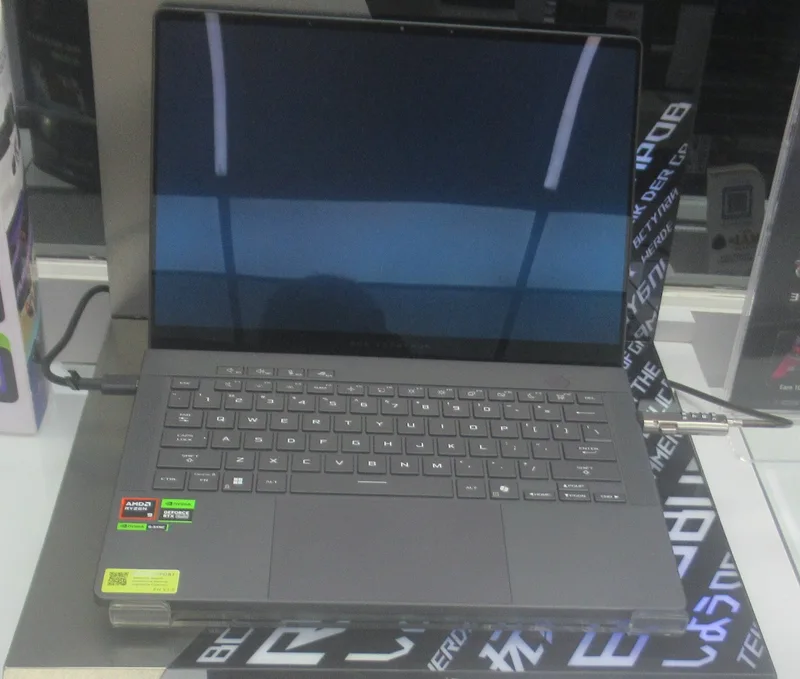
Gaming laptops used to come with an unwritten tradeoff: buy one, and you accept a heavy, loud machine that's only really pleasant to use plugged into a wall next to your desk. The ASUS ROG Zephyrus G14 has spent several generations trying to break that rule, and the current version comes closer than almost anything else in the category to being a laptop you'd actually want to carry to a coffee shop or a lecture hall, not just a gaming rig that happens to fold shut.
What makes it different from a typical gaming laptop
The G14's defining feature has always been its size-to-power ratio. At 14 inches and under 3.5 pounds in most configurations, it's genuinely competitive with mainstream ultrabooks in a backpack, while still packing a discrete GPU capable of running current games at high settings. ASUS achieves this partly through aggressive internal engineering — a redesigned cooling system with liquid metal thermal compound on the CPU in higher-end configurations — and partly through software: ASUS's Dynamic Super Resolution and GPU switching tools let the laptop drop into a low-power integrated graphics mode for everyday tasks, stretching battery life well beyond what you'd expect from something with this much gaming hardware inside.
Everyday use: where it actually succeeds
Outside of gaming, the G14 handles typical daily computing — browsing, documents, video calls, light photo editing — without feeling like you're lugging around unnecessary weight to do it. The keyboard is comfortable for long typing sessions, with enough key travel that it doesn't feel like a compromise made to save internal space for cooling hardware. The trackpad, historically a weak point for gaming laptops, is large and accurate enough for regular productivity work without needing an external mouse for anything beyond precise editing tasks.
Battery life in non-gaming use is the pleasant surprise. Switched into its efficient integrated-graphics mode, the G14 can realistically get through most of a workday of writing, browsing, and video calls, something that would have been unthinkable for a gaming laptop with this level of GPU performance just a few years ago. The moment you launch a demanding game, that changes dramatically — expect two hours or less unplugged under full gaming load — but for a machine this compact and powerful, having a genuine all-day mode at all is the real achievement.
Where the gaming-laptop compromises still show up
Fan noise under load is the most honest weak point. Push the G14 into its highest-performance mode for gaming or heavy rendering, and the cooling system has to work hard enough that the fans become genuinely noticeable in a quiet room — not painfully loud, but enough that gaming in a shared space like a library or open office isn't realistic without headphones. ASUS has improved acoustic tuning generation over generation, but physics still applies: cramming powerful components into a compact 14-inch chassis means the fans have to do more work than they would in a bulkier 17-inch gaming laptop with more room to dissipate heat.
The screen, while genuinely good, sits slightly below the best ultra-premium creator laptops in absolute color accuracy out of the box, and the high-refresh-rate gaming panel prioritizes smoothness for competitive games over the reference-level calibration a professional colorist would want. For gaming and general use, that's the right tradeoff. For color-critical creative work, it's worth knowing the display isn't the G14's strongest selling point.
Build quality and the details that matter for daily carry
ASUS has leaned into distinctive design choices with the G14's lid, offering versions with an AniMe Matrix LED display or textured finishes that stand out from the sea of black gaming laptops. Whether that appeals to you is personal taste, but the underlying chassis quality — aluminum construction, minimal flex, a hinge that stays solid after months of daily opening and closing — holds up well to the kind of repeated daily carrying a pure gaming laptop rarely has to survive, since most gaming laptops stay on a desk.
Ports, connectivity, and the small annoyances
ASUS has generally kept a reasonable port selection on the G14 despite its thin profile, including full-size USB-A ports alongside USB-C, which matters for anyone still using older peripherals, external drives, or gaming accessories that haven't moved to USB-C. That's a genuine advantage over some ultra-thin competitors that have gone all-in on USB-C and require a dongle for anything else. Wi-Fi and Bluetooth performance has been solid across recent generations, without the connectivity dropouts that plague some cheaper gaming laptops trying to cut costs on networking hardware.
Webcam quality is one area where the G14 still trails dedicated productivity ultrabooks — serviceable for video calls but not class-leading, which is a minor but real consideration if you're regularly on camera for work meetings and expect the same polish from every other part of the laptop's design.
Pricing and where it sits against the competition
The G14 typically costs more than a mainstream ultrabook with similar CPU performance, and that premium is entirely the price of the discrete GPU and the engineering required to fit it into such a compact chassis. Compared against other 14-inch gaming laptops, the G14 tends to sit in the middle of the pricing range — not the cheapest option, but generally cheaper than laptops chasing the absolute highest frame rates, which usually sacrifice portability to get there. Viewed purely as a gaming laptop, it's a reasonable value. Viewed purely as an ultrabook, it's expensive for what non-gaming tasks actually need. The value proposition only makes sense if you actually use both sides of what it's built for.
Is it actually worth choosing over a dedicated ultrabook
If you genuinely need gaming performance some of the time and portability the rest of the time — a student who games in the dorm and needs a laptop for class, or a professional who wants one machine for both work and weekend gaming — the G14 solves a real problem that buying two separate laptops otherwise would. If you never game and just want the lightest, quietest, longest-battery-life machine possible, a dedicated ultrabook without gaming hardware will do that specific job better and for less money, since you're not paying for a GPU you won't use. The G14's real audience is the person who has been choosing between "gaming laptop" and "everyday laptop" for years and shouldn't have to keep doing that.