Xiaomi 14: The Flagship Camera Partnership Everyone's Talking About
Xiaomi's flagship phones have spent years building a reputation among enthusiasts as genuinely excellent hardware held back by limited availability outside China and a handful of European and Asian markets. The Xiaomi 14 is the clearest example yet of why that reputation exists: a compact flagship with a camera system co-engineered with Leica, hardware that competes directly with Samsung and Apple's best, and a price that consistently undercuts both — in markets where it's actually sold. Here's what makes it distinct and where it still asks buyers for compromises.
The Leica partnership is more than a badge
Xiaomi's multi-year collaboration with Leica goes deeper than licensing a name for the camera app splash screen. The partnership involves joint tuning of color science, lens coatings, and computational processing, giving Xiaomi phones a distinctive photographic look that leans toward Leica's classic contrast-heavy, slightly desaturated aesthetic rather than the punchier, more saturated processing that Samsung's cameras are known for. Owners can typically toggle between a "Leica Authentic" look, closer to what a real Leica camera would produce straight out of the lens, and a "Leica Vibrant" mode tuned for social media, which is a genuinely useful option most flagship camera apps don't offer as a built-in toggle.
A genuinely compact flagship in a market that's stopped making them
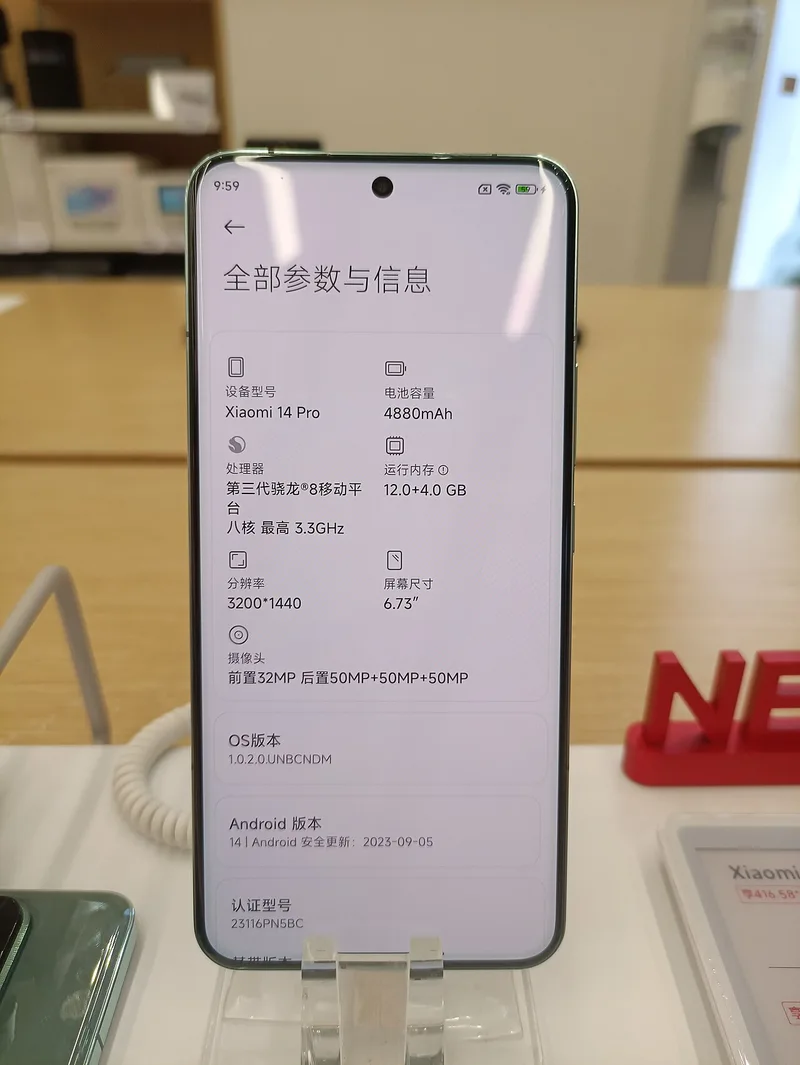
One of the Xiaomi 14's most distinctive traits has nothing to do with the camera: it's one of the last mainstream flagship phones built around a genuinely compact body rather than the 6.7-inch-plus screens that have become the default across the industry. That size choice puts it in direct conversation with Apple's smaller flagship options and makes it relevant to anyone who's been frustrated watching compact phone choices shrink year over year across nearly every other Android brand. Packing flagship-tier camera hardware, a fast processor, and strong battery life into a smaller chassis is a genuine engineering achievement, since smaller bodies leave less room for the battery capacity that usually justifies a phone's camera and performance ambitions.
Performance and everyday software
The Xiaomi 14 runs on flagship-tier Qualcomm silicon comparable to what ships in Samsung's Galaxy S-series and other top-tier Android phones that same generation, meaning day-to-day performance, gaming, and multitasking are competitive rather than a step behind. The bigger differentiator is Xiaomi's own HyperOS software layer, a substantially reworked version of Android that's faster and less bloated than Xiaomi's older MIUI skin was criticized for, though it still carries more built-in apps and customization than a "clean Android" experience like a Pixel phone offers. Buyers coming from an iPhone or a lightly-skinned Android phone should expect a short adjustment period getting used to Xiaomi's settings menus and pre-loaded app choices.
Where availability becomes the real limiting factor
The Xiaomi 14's biggest practical weakness isn't the hardware — it's that Xiaomi still doesn't sell flagship phones through official retail channels in several major markets, including the United States, leaving buyers there to rely on importing a unit, which typically means giving up full carrier network compatibility, warranty support, and access to timely software updates through official channels. In markets where Xiaomi does sell directly — much of Europe, Asia, and Latin America — none of this is a concern, and the phone competes on a level playing field with official pricing and support. Anyone considering an import purchase specifically to get Xiaomi hardware should weigh that tradeoff carefully against simply choosing a flagship that's officially sold and supported where they live.
How it actually compares on camera quality
Since the camera system is the Xiaomi 14's headline feature, it's worth seeing how it holds up directly against the phones people are most likely to cross-shop it with. A detailed Galaxy S24 versus Xiaomi 14 camera comparison breaks down how Leica's more restrained color science stacks up against Samsung's brighter, punchier processing style across a range of lighting conditions. Against Apple's flagship, the comparison shifts to a question of two very different photographic philosophies competing in a similarly compact body, covered in a dedicated look at Xiaomi 14 versus iPhone 16 Pro as compact-flagship cameras specifically. For buyers whose decision ultimately comes down to low-light performance specifically rather than color science, the broader iPhone versus Galaxy S24 low-light comparison is useful additional context on how the two more widely available flagships handle the same conditions Xiaomi is competing against.
Who the Xiaomi 14 actually makes sense for
The clearest audience for the Xiaomi 14 is a buyer in a market where it's officially sold who wants genuinely flagship-tier hardware — camera, performance, build quality — without paying Samsung or Apple's full asking price, and who doesn't mind a software experience that's more customized and opinionated than stock Android. It's a harder recommendation for buyers in markets without official sales, where the savings largely disappear once import costs, lost warranty coverage, and carrier compatibility risk are factored in. Where it is properly sold, though, it's one of the strongest arguments in the entire flagship-phone market that Leica-tuned photography and true compact-flagship dimensions don't have to be mutually exclusive with aggressive pricing.
Battery life and charging speed
Despite its smaller body, the Xiaomi 14 manages respectable all-day battery life thanks to efficient silicon and a high-density battery cell, though it doesn't quite match the endurance of larger-bodied flagships that simply have more physical room for battery capacity. Where it clearly pulls ahead of both Samsung and Apple is charging speed: Xiaomi's wired fast-charging standard fills the battery dramatically quicker than either rival's flagship, often reaching a substantial charge in well under half an hour with the bundled charger. Wireless charging is supported as well, at speeds that are similarly ahead of what Apple and Samsung offer on their equivalent flagships. For anyone who's used to topping up a phone overnight, the difference is mostly academic, but for buyers who regularly run a battery down during the day, the gap in real-world charging speed is one of the more immediately noticeable advantages over the competition.
Build quality and design language
Xiaomi has invested heavily in making its flagship hardware feel as premium as its pricing suggests it shouldn't, with a metal frame, curved glass back, and an official IP rating for dust and water resistance that puts it on equal footing with Samsung and Apple's flagships on durability specs, at least on paper. The camera module design borrows visual cues from Leica's own camera bodies, down to the circular lens housing and red accent detailing, which gives the phone a distinct identity on a shelf full of otherwise similar-looking rectangular slabs. It's a small detail, but it reinforces that the Leica partnership extends into industrial design decisions, not just the software processing behind each photo.