Gaming Laptop or Handheld? How to Actually Decide in 2026
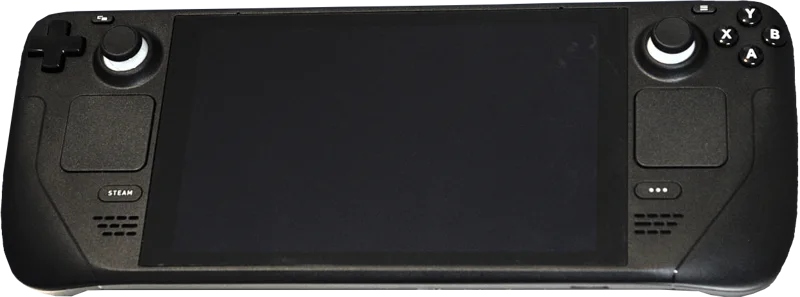
A gaming laptop and a PC handheld like the Steam Deck can, in principle, run the same library of Steam and other PC games — which makes the choice between them feel like it should come down to raw specs. In practice, the two solve genuinely different problems, and picking based on benchmark numbers alone leads a lot of buyers to a device that doesn't actually match how they play.
Where you actually play matters more than what you can play
The single most useful question to ask before comparing specs is where you actually play games, physically. A handheld is built around the assumption that you're playing on a couch, in bed, on a train, or anywhere without a desk and a monitor available — its entire design, from the built-in controls to the small integrated screen, optimizes for that scenario. A gaming laptop assumes at least occasional access to a desk, and while it's technically portable, most people don't actually game on one balanced on their knees for extended sessions the way they would with a purpose-built handheld. If your actual play pattern is mostly sitting at a desk already, a gaming laptop's larger screen and more powerful hardware solve a problem a handheld doesn't need to solve.
Raw performance: laptops still win by a wide margin
On raw performance, a gaming laptop with a discrete dedicated GPU comfortably outperforms any current handheld, often by a factor of three to five times in demanding titles at equivalent settings. This gap exists because handhelds are constrained by battery life and a form factor that can't accommodate the cooling a full discrete GPU needs. Our Steam Deck explainer covers exactly what that performance ceiling means in practice — plenty of games run well within a handheld's power budget at appropriately reduced settings, but the newest, most demanding titles at high settings are simply out of reach on handheld hardware in a way they aren't on even a mid-range gaming laptop.
Battery life tells a more complicated story than the spec sheet
Battery life numbers favor handhelds on paper, but the comparison is more complicated than it looks, because handhelds are also running much more demanding workloads relative to their battery capacity than a laptop typically is at idle-to-light use. A handheld running a demanding modern title at native performance can drain in under two hours, similar to a gaming laptop under a heavy load, while a gaming laptop doing lighter tasks like browsing or older, less demanding games can stretch considerably longer than most people expect from a device with "gaming" in its marketing. Neither device is a genuine all-day battery machine under sustained gaming load — that's simply the trade-off of the performance both categories are built to deliver.
Upgradability and long-term value differ sharply
Gaming laptops generally allow some hardware upgrades — additional storage, sometimes RAM — though the GPU and CPU themselves are typically soldered and not user-replaceable in most modern thin designs. Handhelds are almost entirely fixed hardware, with the main user-serviceable component usually being internal storage. This means the long-term value calculation differs: a gaming laptop can be kept relevant longer through modest upgrades and doubles as a general-purpose computer for work, browsing, and creative tasks, while a handheld is a more single-purpose device whose entire value proposition rests on its specific form factor rather than raw upgrade headroom.
Comparing directly against Nintendo's approach
It's also worth comparing a PC handheld against a console-first handheld like Nintendo's Switch line before assuming "handheld" automatically means "PC handheld" — the two approach the same physical form factor with very different software philosophies, one open to your existing PC library and one built around a curated first-party and third-party catalog. Our Nintendo Switch 2 vs Steam Deck comparison breaks down that distinction in more depth, which matters as much as the laptop-versus-handheld decision itself for anyone who hasn't already committed to a specific game library or storefront.
The real cost comparison isn't just the sticker price
Sticker price alone understates the real cost difference between the two categories once accessories and total cost of ownership enter the picture. A gaming laptop typically needs no additional purchase to use at full capability, while a handheld often benefits from a dock for TV output, a case for travel protection, and potentially a controller grip upgrade — costs that add up and are worth budgeting for rather than comparing base prices alone. Our PC gaming vs console cost breakdown covers a related version of this total-cost question that applies well beyond just console comparisons, and the same principle of looking past the initial price tag applies directly here.
Control schemes and screen size change the actual experience
Beyond raw power, the physical experience of playing differs more than spec comparisons usually capture. A handheld's built-in controls are purpose-built for gaming — proper analog sticks, dedicated buttons, and often trackpads or back paddles positioned specifically for comfortable extended play — while a gaming laptop typically means either an external controller or the laptop's own keyboard, which works fine for many genres but isn't a substitute for console-style controls in games designed around them. Screen size cuts the other way: a handheld's small integrated display, while sharp, is a genuinely different viewing experience than a 15 or 17-inch laptop panel, and detail-heavy strategy games or anything with small on-screen text can feel cramped on a handheld in a way that simply isn't a concern on a laptop.
Noise and where you can realistically play
Fan noise is a smaller but real practical difference worth considering. A gaming laptop under full load, especially in a thin chassis pushing a powerful GPU, can get genuinely loud — audible across a room and a real consideration for shared living spaces, late-night sessions, or open-plan offices. Handhelds run smaller, lower-power components and are correspondingly quieter even under sustained load, which matters more than it might seem for anyone planning to game in a bedroom, a shared apartment, or anywhere close proximity to other people is the norm rather than the exception.
A simple way to decide
If your gaming happens primarily away from a desk — commuting, traveling, or casually around the house — and you're willing to accept reduced settings on the newest titles, a handheld solves a problem a laptop genuinely can't solve as well. If you want maximum performance, don't mind being tethered to a desk or a specific room most of the time, and want a machine that can also handle serious work tasks, a gaming laptop is the better investment. Buying based on where and how you actually play, rather than which device benchmarks higher in a review, is the decision that holds up best a year or two after the purchase.