PS5 QSSR AI Upscaling: What Sony Says
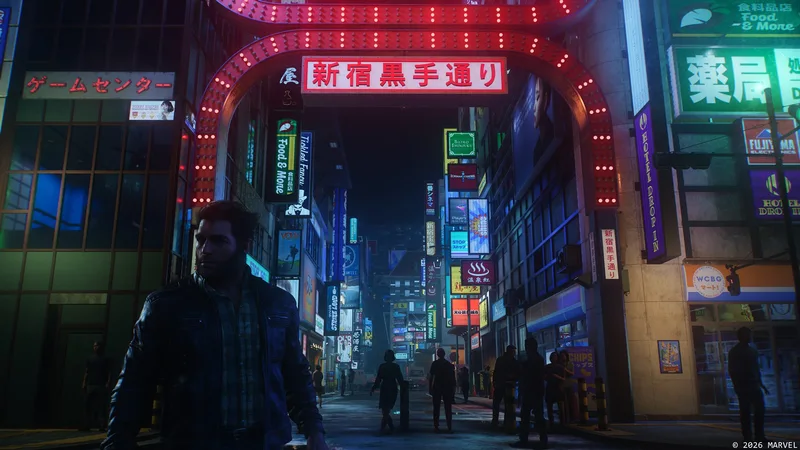
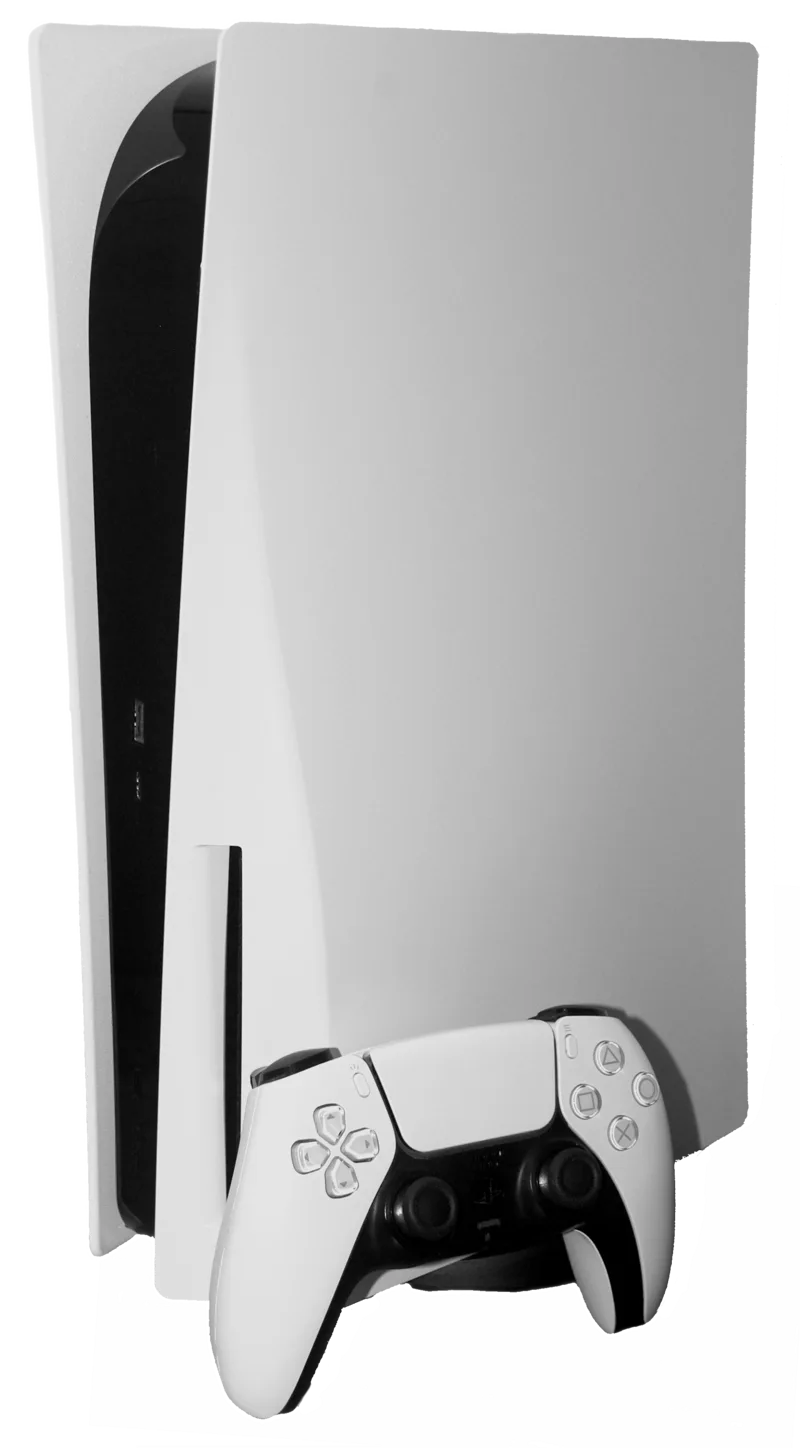
Sony Interactive Entertainment has announced that AI upscaling is coming to the standard PS5. In a PlayStation Blog post on October 1, Principal Engineer Daniel Craig introduced Quick Spectral Super Resolution, or QSSR, a new performance tier of the AI upscaling technology that previously ran only on the PS5 Pro. The first two games to use it, Marvel's Wolverine and Ghost of Yotei, were patched the same day to offer QSSR as an additional graphics option. This guide explains what the technology is, what Sony has and has not said, and what to check if you own a base PS5. For a short reference to this page, here is our QSSR AI upscaling explainer. Everything below is based on Sony's own blog post, and Sony has not published frame rates, resolutions or other measurements, so we do not invent any.
The background: PSSR on PS5 Pro
When Sony launched PlayStation Spectral Super Resolution, or PSSR, on the PS5 Pro, the pitch was that a console could render a game at a lower internal resolution and then use a trained neural network to rebuild a sharper image. Sony describes PSSR as analyzing game images pixel by pixel and using AI to upscale them with more detail and stability than conventional approaches. Since then, according to Craig, players and developers kept asking whether similar image-quality gains could reach the regular PS5. Until now, he says, the computational demands of PSSR made that impossible.
QSSR is Sony's answer. It is described as a new performance tier of AI upscaling, a quicker evolution of PSSR. Sony says it was born from Project Amethyst, its AI graphics collaboration with AMD, and rests on two innovations: a streamlined neural network architecture and a hand-tuned implementation that maximizes performance on PS5. Put simply, the network is smaller and the code is tuned for the base console's hardware, which is what the company says lets it run where the full PSSR could not.
What Sony says QSSR delivers
Sony's claim is measured. It says PSSR remains the gold standard on PS5 Pro, while QSSR provides notable improvements to both image detail and image stability on PS5. The two words matter. Detail is about how much fine texture and edge definition survive when the game is reconstructed from fewer rendered pixels. Stability is about how steady the image looks from frame to frame, with less shimmering, crawling edges or flicker on thin objects such as wires, fences and foliage. Traditional upscalers often trade one for the other, and the promise of AI upscaling is to improve both.
It is worth stating what the post does not say. It does not give a target resolution, frame rate or performance cost, and it does not say how QSSR output compares with the PS5 Pro in side-by-side shots. A comparison of QSSR versus PSSR will have to wait for independent analysis, and the games' own patch notes will show whether it is positioned as a quality mode or a performance mode.
The first two games
The launch titles for QSSR are first-party. Marvel's Wolverine, from Insomniac Games, and Ghost of Yotei, from Sucker Punch Productions, are both being patched on October 1 so that QSSR appears as an additional graphics option on PS5. The word additional is important: it implies that QSSR is a choice players can turn on, not a silent replacement of the existing rendering modes, so you will be able to compare it yourself.
Both studios supplied comments. Insomniac's Mike Fitzgerald, Head of Technology, said QSSR adds more pixel-level clarity and stability to environments, naming the busy streets of Madripoor and the dense alleyways of Shinjuku, and described it as a good taste of the PS5 Pro experience for PS5 players. Sucker Punch's Jasmin Patry, Lead Rendering Engineer, said QSSR excels at resolving fine details in characters and environments with a level of temporal stability that had not been possible on the PS5 console until now, and called it a positive step toward giving all PS5 players the image quality PSSR brings to PS5 Pro. These are developer endorsements, not measurements, but they do show how the studios intend to use it.
Why upscaling matters on a console
Every console generation reaches a point where the hardware is asked to do more than it can render natively at high resolution and smooth frame rates. Upscaling is the standard way out. Rather than draw every pixel of a 4K picture, the game renders fewer pixels and a reconstruction step fills in the rest. Older techniques such as checkerboard rendering and temporal upscaling use clever rules. AI upscaling uses a network trained on many examples to predict what the high-resolution image should look like, which can recover detail that rules-based methods blur or lose.
For an established console architecture like the base PS5, getting this kind of reconstruction to run fast enough is a real engineering problem, which is why Sony emphasizes the streamlined network and hand-tuned implementation. Neural upscalers cost GPU time themselves, so a lighter version has to save more time in rendering than it spends in reconstruction. Sony does not publish the balance, and it will differ by game.
What it means for developers
Sony says QSSR will be offered broadly to all PlayStation developers. That is the sentence with the longest tail: if third-party studios adopt it, many PS5 games could gain a better image mode over time. But adoption is up to each studio and each game's technical situation, and Sony has not committed to a list of titles beyond the first two. Treat future support as a possibility rather than a promise.
Who is this for
- Base PS5 owners who play on a 4K TV. Sharper detail and steadier edges are most noticeable on a large screen, and these players benefit most from an upscaler.
- People deciding whether to buy a PS5 Pro. QSSR narrows the gap in image reconstruction, though Sony still calls PSSR the gold standard on the Pro, so the upgrade question depends on the games you play and how sensitive you are to image quality.
- Owners of Marvel's Wolverine or Ghost of Yotei. You can try the new option right away after updating.
What to check before using it
- Update your games. Sony says both titles are patched on October 1, so make sure automatic updates have installed the patch.
- Find the setting. QSSR is described as an additional graphics option, so look in each game's graphics menu rather than the console system settings.
- Compare modes. Because we have no official numbers on frame rate or resolution, test QSSR against the existing modes on your own TV and judge sharpness, stability and smoothness.
- Display setup. Check that your TV is set to a low-latency or game mode, since upscaling is only one part of overall image quality.
- Keep expectations realistic. Sony says QSSR offers notable improvements on PS5, not that it matches the PS5 Pro.
Weak points and open questions
The announcement is short on hard data. There are no frame rate, resolution or latency numbers, no list of future titles and no information on whether the technique has any trade-offs such as artifacts in fast motion. We also do not know whether Sony plans any system-level support. All of those will be clear once players and technical reviewers have spent time with the patches, and we will not guess before then.
Bottom line
QSSR is a meaningful quality-of-life announcement for the largest group of PlayStation 5 owners: people on the standard console who have watched PS5 Pro owners get AI upscaling. Its first two games will be the real test, and the commitment to offer it to all developers is the part that could matter most in the long run. If you own either game, try it today and trust your eyes. If you are weighing a console upgrade, wait for independent comparisons before deciding what QSSR changes for you.