Garmin fenix 9 and fenix 9 Pro: Titanium, Brighter AMOLED and Satellite SOS
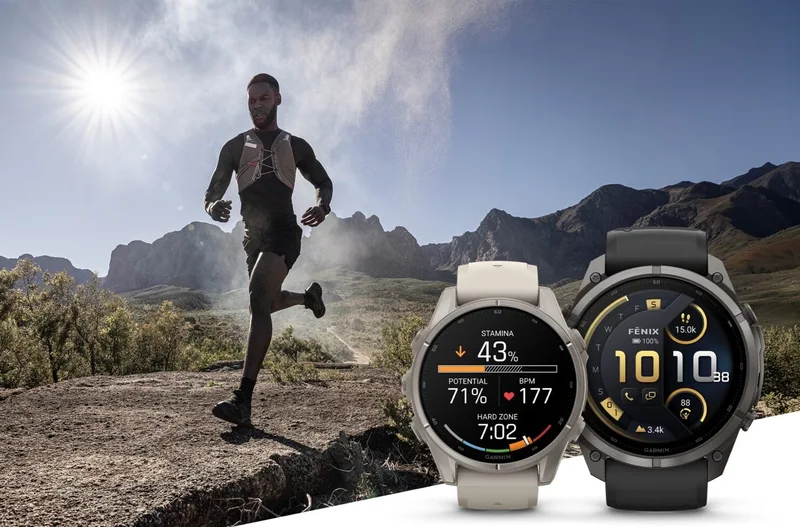
Garmin has updated its flagship multisport line with the fēnix 9 and fēnix 9 Pro, announced on August 25. The regular model gets a brighter AMOLED screen, a sapphire lens and a bigger dose of memory, while the Pro version brings something the fēnix family has never had: a titanium case and built-in satellite and LTE connectivity for messaging and SOS from the wrist. Both are on sale now at $999.99 and $1,099.99 respectively, and both come in 43mm, 47mm and 51mm sizes. Here is a practical breakdown of what changed and who the extra money is really for.
Two watches, one clear dividing line
Garmin's fēnix series has long been the do-everything option for people who run, ride, climb, ski and swim, and the ninth generation keeps that identity. The split between the two models is simple. The fēnix 9 starts at $999.99 and covers the core upgrades: a display that Garmin says is twice as bright as its predecessor's, a scratch-resistant sapphire lens, a dive rating to 40 meters and more memory. The fēnix 9 Pro starts at $1,099.99 and adds the titanium case, an even brighter panel, a flashlight, solar charging on selected models and the connectivity package.
The price gap is small compared with the entire cost of the watch, so the decision comes down to a single question: will you ever be somewhere without cell coverage where you would want to send a message or call for help from your wrist? If the answer is yes, the Pro is the sensible pick. If your adventures stay within reach of a phone signal, the base model delivers most of the hardware benefits.
The display and the hardware upgrades
Every model uses an AMOLED display, and Garmin quotes double the brightness of the fēnix 8. The fēnix 9 Pro goes further, reaching up to 3,000 nits, and the 51mm Pro is the first fēnix with a 1.5-inch AMOLED display, which Garmin says is 15 percent larger. Brightness is not an abstract number for an outdoor watch. Reading a map in direct sun, checking pace on a white-out snowfield or glancing down during a bright trail run is where a dim screen fails, and it is where this upgrade should be most noticeable. If you are curious how screen technology trade-offs affect real use, our explainer on OLED versus mini-LED displays covers the same principles on a larger screen.
Under the hood the fēnix 9 has 50 percent more RAM than the fēnix 8, and Garmin says map panning is 30 percent faster. Storage has doubled to 64GB, which the company says supports twice as many maps and up to 7,000 songs. A new Perspective view feature adds a different way to look at terrain on the map. Those changes sound incremental, but slow maps have been a common complaint for GPS watches, so smoother scrolling is a change users will feel.
Battery life claims
Battery life on the fēnix line has always been a selling point. Garmin quotes up to 29 days in smartwatch mode for the largest fēnix 9 and up to 31 days for the largest AMOLED fēnix 9 Pro. Selected Pro models with solar charging are rated for up to 57 days. Those figures are best-case, measured with modest use, and battery life will drop noticeably once you use GPS heavily, keep the screen bright or stream music. It is still the right order of magnitude to compare with mainstream smartwatches, which typically need charging every day or two; for a longer explanation of why spec-sheet numbers and real life diverge, read our piece on battery life on paper versus reality.
Satellite and LTE on the Pro
The fēnix 9 Pro is the first in the family with satellite and LTE connectivity, and Garmin says inReach connectivity is on every Pro size for the first time. That gives you voice, text and SOS communication directly from the watch, along with 24/7 access to the Garmin Response coordination center, LiveTrack notifications through the Garmin Messenger app, a Garmin Locate feature for sharing your location through the app, and weather forecasts by satellite or LTE. There are caveats that Garmin itself notes: an active plan is required, LTE coverage is not available in every region, and satellite connections have limitations. Before relying on any of this, check the coverage map and plan price for the countries you actually travel in.
It also helps to understand what satellite messaging is and is not. It is a lifeline for sending short messages and triggering a rescue request, not a replacement for a proper navigation plan and emergency kit. Our comparison of satellite SOS on iPhone, Pixel and Galaxy explains the practical limits, such as needing a clear view of the sky and accepting slower delivery than normal texting.
Training features and software
New software features include Garmin Epic, which lets you group multiple activities into a single shareable story in Garmin Connect. That is aimed at multi-stage days such as a hike followed by a swim, or a race with several disciplines. Stamina tracking has been expanded with zones and curve metrics, indoor rowing gets metrics including VO2 Max and a power curve, and rucking gets support for pack weights of up to 100 kilograms. These are small additions on paper, but they signal that Garmin is chasing niche disciplines instead of just adding another generic health chart. If you are comparing training-oriented watches with lifestyle-first devices, our overview of what Oura, Whoop and similar trackers do differently is a helpful contrast.
Materials, accessories and small details
The titanium case is a first for the fēnix line and appears on the Pro. Garmin is also launching ComfortFit bands, made of fabric in a split-weave design that works with QuickFit. The Pro's LED flashlight includes a green-light mode, and the top-tier version's solar lens adds trickle charge in daylight. The company also lists dive support to 40 meters on the fēnix 9.
Who should buy it
Because these are $1,000-plus watches, the sensible approach is to match the model to the risk profile of your activities. Ultra-runners, alpine and backcountry users, sailors and people who spend days without reliable coverage are the target for the Pro and its connectivity. Multisport athletes who want great battery life and a brighter screen but stay near cell signal will be well served by the standard fēnix 9. If you own a fēnix 8, the improvements in memory, map speed and screen brightness are helpful but not urgent, so consider waiting unless you specifically need the satellite features or the titanium build.
Whichever you choose, do three things before buying: confirm the case size suits your wrist, since 51mm is large; find out the monthly cost of the connectivity plan in your country; and check whether the software features you care about are available on your existing phone. A watch this capable rewards a little preparation.