Periscope Zoom Cameras Explained: How Phone Telephoto Lenses Actually Work
Every flagship phone launch now leans hard on one camera spec: how far the zoom reaches before the photo falls apart. The answer, on nearly every high-end phone released in the last few years, comes down to a single piece of engineering borrowed from binoculars and telescopes: the periscope zoom camera. Understanding how it actually works explains why some phones zoom cleanly to 5x or 10x while others turn mushy past 2x, and why the physical shape of a phone's camera bump keeps getting stranger.
Why phones needed a workaround in the first place
A conventional camera lens gets its zoom range from physical distance: light enters the front element, travels through a stack of glass, and hits the sensor at the back. The more "reach" you want, the more physical length that light path needs, which is why a DSLR telephoto lens is a foot long. A modern phone is barely 8 millimeters thick. There simply isn't room to stack enough glass vertically to create genuine optical zoom the way a dedicated camera does.
For years, phone makers solved this with digital zoom, which just crops and upscales the image from the main sensor. It works passably up to about 2x because sensors have enough resolution to spare, but past that point you're stretching pixels, and detail falls apart fast, especially in anything but bright daylight.
How a periscope lens bends the problem sideways
The fix, popularized on flagship Android phones and now standard on the highest-tier iPhone 16 Pro models too, is to stop trying to fit the lens vertically and instead lay it on its side. A prism or angled mirror sits behind the tiny front opening you see in the camera bump, and it redirects incoming light 90 degrees so it travels horizontally through the phone's body instead of straight through its thickness. That horizontal path can be much longer than the phone is thick, because it runs parallel to the screen rather than perpendicular to it, which is exactly the trick that lets these modules deliver genuine optical zoom instead of a digital crop.
This is also why periscope camera bumps look different from the rest of the array: the sensor and lens elements are arranged in an L-shape or straight line running sideways inside the chassis, and the front glass covering that bent light path is often a slightly different shape or size than the main and ultrawide lenses next to it.
What "5x optical" and "10x optical" actually mean
When a phone advertises 5x or 10x optical zoom, that number describes the focal-length ratio between the periscope telephoto lens and the phone's main wide camera, not some arbitrary marketing figure. A 5x periscope module typically has a focal length equivalent to roughly 120mm on a full-frame camera, compared to the main camera's roughly 24mm equivalent. Anything beyond that native optical range, like the 30x or 100x numbers phones sometimes print in a settings menu, is a mix of the optical zoom plus digital cropping and AI-assisted upscaling working together, and image quality drops noticeably once you cross that boundary.
This is the same reason comparisons between phones, like our Pixel 9 Pro vs iPhone 16 Pro camera comparison, spend so much time on native zoom range rather than the maximum digital number on the spec sheet. A phone with 5x true optical zoom and smart digital processing beyond that will usually beat a phone claiming a higher digital-only maximum.
The trade-offs that come with a bent lens
Periscope modules solve the space problem, but they introduce their own compromises. The prism and folded light path mean the aperture on periscope lenses is typically narrower than the main camera's, often around f/2.8 to f/3.5 compared to f/1.6 to f/1.9 on the primary lens. A narrower aperture lets in less light, which is why zoom photos in low light tend to look noisier and less detailed than wide shots taken in the same room, even on phones that otherwise excel at night photography.
Autofocus and stabilization are harder too. Because the moving parts have to shift a mirror or prism rather than just a lens element, periscope modules rely on specialized optical image stabilization that moves the prism itself, and mechanical tolerances are tighter. It is one reason periscope cameras appear almost exclusively on flagship-tier phones rather than mid-range ones: the module costs meaningfully more to manufacture and calibrate than a fixed short telephoto lens.
How different brands have approached it
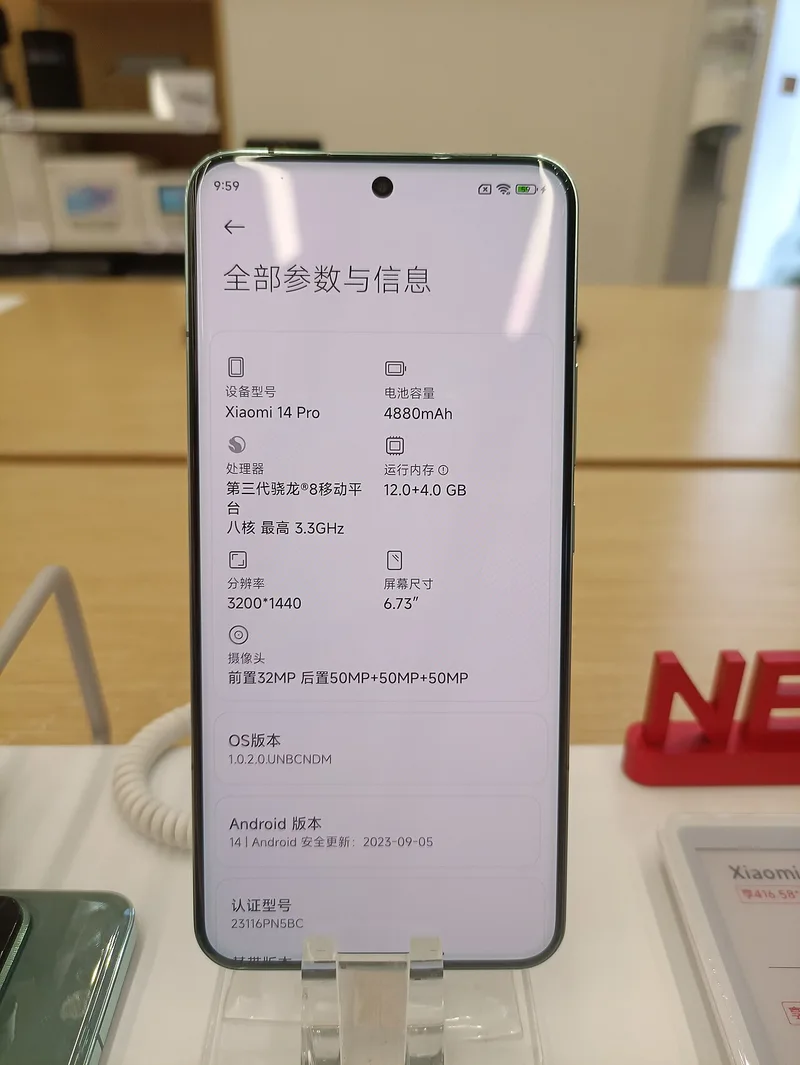
Camera partnerships have become part of how phone makers differentiate their periscope implementations. Xiaomi's flagship line, for instance, has leaned on co-engineered optics and tuning partnerships to shape how its telephoto output looks, favoring a particular color and contrast signature rather than just chasing the highest zoom multiplier. Samsung has historically pushed the highest raw zoom numbers in its ultra-tier phones, often pairing a periscope telephoto with a second, shorter telephoto lens so there's a smoother handoff between the main camera and the periscope module. Apple came to periscope zoom later than its Android rivals, but once it did, it standardized the feature only on its Pro-tier iPhones, treating it as a top-of-line differentiator rather than something every model gets.
What this means when you're actually shopping
If zoom photography matters to you, treat the "optical zoom" figure, not the digital maximum, as the number that predicts real-world quality. Ask specifically what the native focal length multiplier is, since that's the range where periscope glass is doing genuine optical work rather than software guesswork. It's also worth checking sample photos at that phone's stated optical range in dim, indoor lighting, since that's where the narrower aperture of periscope lenses shows its limits most clearly. A phone with a shorter but well-executed 3x periscope module can outperform one boasting a longer zoom range if the shorter one has a wider aperture and better stabilization.
Ultimately, the periscope camera is one of the clearest examples of phone engineering solving a physics problem through clever geometry rather than brute force. As sensor and prism technology keeps shrinking, expect the zoom ranges on mid-range phones to slowly catch up to what only ultra-flagships could do a few years ago, the same pattern that played out with optical image stabilization and multi-lens arrays before it.