PS5 Pro: Who Actually Needs the Upgrade
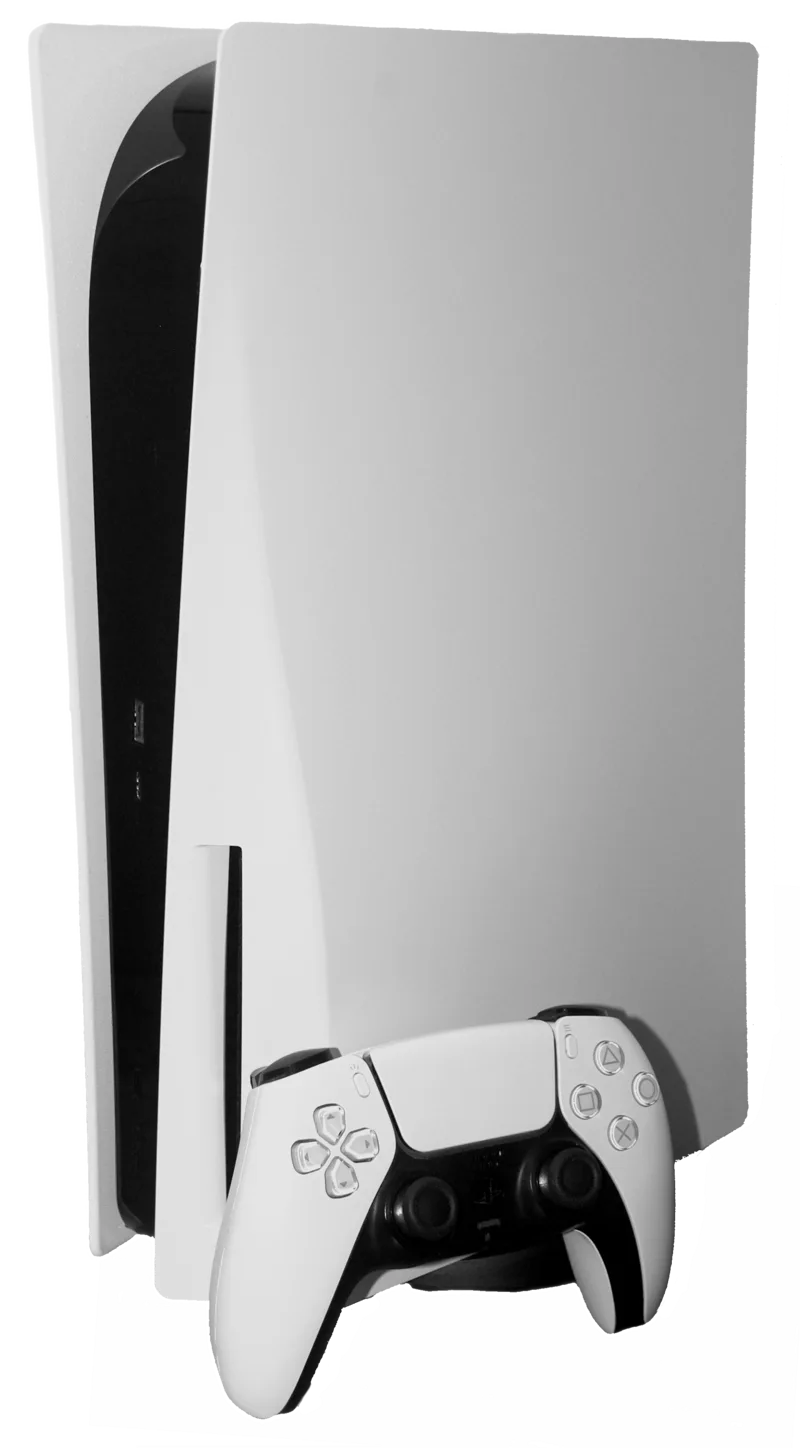
Sony's PlayStation 5 Pro is built around one core promise: better image quality and more stable frame rates in the games that already push the base PS5 hardest, particularly titles running ray-traced lighting and reflections. The GPU is substantially more powerful than the base console's, and Sony's PSSR (PlayStation Spectral Super Resolution) upscaling tech is a genuine step up from the checkerboard rendering tricks the original PS5 relied on. Whether that translates into a purchase worth making depends heavily on what television you own and which specific games you play, more than most console marketing tends to admit.
The catch: it's entirely dependent on individual game support
The catch is that the benefit is entirely dependent on individual game support. Titles with a dedicated "PS5 Pro Enhanced" patch see real gains — sharper image quality in performance mode, or ray tracing enabled in modes where the base console couldn't sustain it. Games without that patch run essentially identically to a base PS5, just with slightly faster load times from the higher-speed included SSD configuration. This is worth checking on a per-game basis before assuming every title in your library will look or run noticeably better — Sony maintains a running list of Pro Enhanced titles, and it's grown steadily since launch but still doesn't cover every game in a typical library, especially older or smaller-studio titles.
PSSR upscaling versus the competition
PSSR works conceptually similarly to the AI upscaling techniques used across the PC space, taking a lower native render resolution and using machine-learning-trained reconstruction to approximate a much higher-resolution image without the full rendering cost. It's Sony's first real entry into that category of technology, and while it's a clear improvement over the PS5's older checkerboard rendering approach, it's a newer, less mature implementation than some of the AI upscaling techniques that have been refined over multiple generations on PC. Our DLSS vs FSR vs XeSS explainer covers how those PC-side upscaling technologies actually work under the hood, which is useful context for understanding what PSSR is attempting to replicate in console form and how far the technology still has room to mature.
Who actually notices the difference
For players who exclusively play on a standard 1080p or older 4K TV without high refresh rate or advanced HDR support, much of the visual upgrade is hard to perceive at normal viewing distance — the extra detail PSSR reconstructs and the more stable frame rate in ray-traced modes both require a display capable of actually showing that difference to matter. The console makes the most sense for players with a genuinely capable 4K/120Hz HDR display who are bothered by dropped frames or lower-resolution performance modes on the base console in graphically demanding titles. If your current TV is several years old or lacks HDR and high-refresh support, upgrading the display would likely deliver more visible improvement than upgrading the console alone.
Comparing it against alternatives in the same budget range
Existing PS5 owners without one of those specific frustrations — inconsistent frame rates in ray-traced modes on a high-end display — are unlikely to feel the difference enough to justify replacing a console that still receives every first-party game at the same day-one release. It's also worth weighing the PS5 Pro's price directly against buying a base PS5 alongside a different upgrade entirely, or against Microsoft's current lineup — our PS5 Pro vs Xbox Series X value comparison breaks down where that money is genuinely better spent depending on your existing library and priorities, and our PS5 Pro vs Nintendo Switch 2 piece is worth reading if portability is a competing priority against raw power for your next console purchase.
Backward compatibility and the existing library
One thing the PS5 Pro doesn't change is the fundamental backward-compatibility story: your existing PS5 and most PS4 digital and disc library carries over without any additional purchase, and existing save files transfer seamlessly through the same cloud-save system Sony has maintained since the PS5's original launch. That continuity is worth keeping in mind when weighing the upgrade cost against a base PS5 — you're not paying for a new game library, only for the console hardware improvement itself, which sharpens the calculation considerably for players deciding whether the specific visual gains are worth the price difference on their own.
Storage and the practical cost of a growing library
The PS5 Pro's larger included SSD configuration is a genuine quality-of-life improvement that gets less attention than the GPU upgrade, but matters just as much for day-to-day use. Modern AAA titles routinely exceed 80-100GB installed, and a console that fills up faster means more time spent uninstalling and reinstalling games rather than actually playing them. Players with a large, actively rotating library — several open-world or live-service titles installed simultaneously — will notice this benefit more consistently in daily use than they will notice the ray-tracing improvements in any single game, simply because storage pressure is a constant background annoyance while visual upgrades only show up while actively playing an enhanced title.
Noise and power draw under sustained load
The more powerful GPU inside the PS5 Pro also draws more power and generates more heat under sustained load than the base console, and while Sony redesigned the cooling solution to compensate, fan noise during extended sessions of the most demanding enhanced titles is audibly higher than on a base PS5 running the same game in its standard mode. It's a minor consideration next to the visual and performance gains, but worth knowing for anyone sensitive to background fan noise during long play sessions in a quiet room, particularly since the difference is most noticeable during exactly the graphically demanding scenes where the Pro's extra power is doing the most work.
The bottom line
The PS5 Pro is a genuinely well-engineered piece of hardware solving a real, specific problem — but it's a problem that only exists for players with the display and game library to actually experience the difference. For everyone else, a base PS5 remains a completely valid, meaningfully cheaper way to play the exact same day-one game lineup, and the smarter upgrade path for many players is a better television first, a Pro console second.