Smart Home Air Quality Monitors: What They Actually Measure
Smart home air quality monitors have quietly become one of the most common additions to connected homes, sitting on a shelf or nightstand and reporting numbers most owners only vaguely understand. A glowing color or a score out of 100 feels informative, but the actual sensors inside these devices measure very different things with very different levels of accuracy, and knowing what's genuinely being detected, versus estimated or ignored entirely, is the difference between a monitor that actually informs decisions and one that's just a pleasant-looking gadget.
The pollutants these devices actually measure
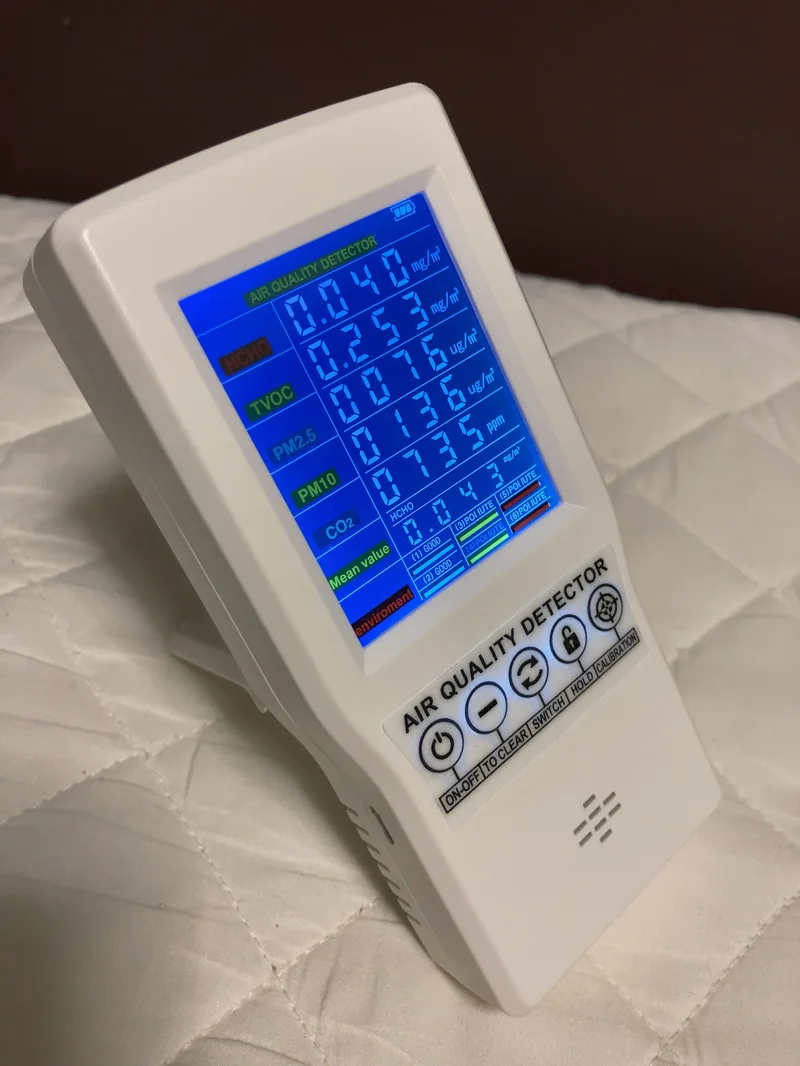
Most consumer air quality monitors track some combination of a handful of core measurements: particulate matter, commonly labeled PM2.5 and PM10, which refers to tiny airborne particles small enough to be inhaled deep into the lungs, from sources like cooking, dust, smoke, and outdoor pollution seeping indoors. Volatile organic compounds, usually shown as VOCs or TVOC, come from sources like cleaning products, paint, furniture off-gassing, and personal care products, and are typically measured as a general total rather than identifying specific chemicals. Carbon dioxide levels indicate ventilation quality, since CO2 builds up in poorly ventilated rooms with people breathing in them, and a rising reading is one of the more reliable signals that a room needs fresh air. Humidity and temperature round out the typical sensor package, less about pollution directly and more about conditions that affect mold growth and comfort.
Where the sensors are genuinely reliable
Particulate matter sensors in consumer devices generally use a laser-based optical method that shines light through air and measures how it scatters off particles, a technique that's reasonably well-established and produces meaningfully useful relative readings, good enough to notice when cooking, candles, or outdoor smoke are affecting indoor air, even if the exact numeric value isn't laboratory-grade precise. CO2 sensors using proper non-dispersive infrared technology, the more accurate and more expensive sensor type, are similarly reliable for their core purpose: flagging when a room needs ventilation. These two measurements are where budget and premium consumer monitors tend to agree most closely with each other and with more expensive reference equipment.
Where the numbers get less trustworthy
VOC readings are the weakest link in most consumer air quality monitors. The sensors used typically detect a broad category of chemicals without distinguishing between something relatively harmless, like the smell of fresh coffee, and something genuinely concerning, like a solvent fume, lumping them into a single vague score. This means a VOC spike is a signal worth investigating rather than a diagnosis of a specific problem, and two different monitors sitting in the same room can report meaningfully different VOC numbers because they're using different sensor technology and different calibration baselines. Cheaper CO2 sensors present a separate, less obvious issue: some budget devices don't use true CO2 sensors at all, instead estimating carbon dioxide levels based on VOC readings through a calculation, producing a number labeled "CO2" that isn't actually a direct measurement, a distinction worth checking in a product's specifications before trusting the reading during, for example, deciding whether a bedroom needs a window open overnight.
How these devices fit into a broader smart home
Air quality monitors increasingly connect into the same ecosystems covered in our look at whether smart thermostats actually save money, triggering an HVAC system's fan or a connected air purifier automatically when particulate or VOC readings cross a set threshold, turning a passive reading into an actual automated response rather than just a number to check manually. Some also integrate with the wider interoperability push described in our explainer on the Matter smart home standard, though air quality sensors have been a slower category to adopt Matter compared to lights and locks, meaning cross-brand automation involving air quality data is still more limited than with more established device categories.
How air quality monitors compare to robot vacuums as an "invisible chore" device
Air quality monitors belong to a broader category of smart home devices that work best when they're mostly forgotten, quietly collecting data and triggering automations in the background rather than demanding daily attention, similar in spirit to how robot vacuums handle floor cleaning without needing to be manually scheduled every time. The comparison is useful because it highlights what actually separates a genuinely useful air quality monitor from a novelty: automation triggers and reliable trend data matter far more day-to-day than checking a live number on an app, the same way a robot vacuum's real value is consistent background cleaning rather than any single cleaning session.
What a reading actually tells you to do
The practical value of these devices isn't the precise number, it's the trend and the trigger points. A PM2.5 reading that spikes every time dinner is cooked is a useful, actionable signal to run a range hood or open a window, regardless of whether the exact numeric value matches a reference-grade sensor down to the decimal. A CO2 reading that climbs steadily through the night in a closed bedroom is a legitimate, well-supported signal that ventilation is inadequate, independent of brand or sensor cost. Treating VOC scores as a general early-warning indicator rather than a precise chemical readout, while giving more weight to particulate and CO2 numbers, is the more accurate way to use these devices than trusting a single combined "air quality score" that blends several different measurements of very different reliability into one number.
What to check before buying one
For anyone shopping for a monitor, the sensor types listed in the specifications matter more than the brand or the app's interface. A device using a laser particulate sensor and a genuine infrared CO2 sensor, rather than an estimated one, is worth paying more for if accurate readings are the actual goal rather than just a general sense of trend. Placement matters too, a monitor tucked in a corner away from normal airflow, or sitting directly next to a kitchen, will report numbers that don't represent the room as a whole. And because indoor air quality monitors are still a relatively young consumer category compared to smart thermostats or video doorbells, checking whether a specific model has been evaluated against reference instruments by an independent reviewer, rather than trusting a manufacturer's own accuracy claims, remains a genuinely worthwhile step before buying.