RCS Messaging Explained: Why Texts Between iPhone and Android Finally Look Right
For more than a decade, texting between an iPhone and an Android phone meant falling back to SMS: no read receipts, no typing indicators, compressed and blurry photos, group chats that fell apart the moment one person joined from the wrong kind of phone. Apple's iMessage handled all of that beautifully, but only between iPhones. Android had its own rich messaging tools that didn't talk to Apple's either. That finally changed when Apple added support for RCS, the messaging standard Google had spent years pushing carriers and phone makers to adopt. The green bubble hasn't disappeared, and it isn't going to, but what happens inside that green bubble is now dramatically different than it used to be.
What RCS actually is
RCS stands for Rich Communication Services, and despite years of being associated mostly with Google, it's technically a carrier-industry standard, not a Google product. It was designed from the start as a modern replacement for SMS and MMS, the messaging protocols that date back to the 1990s and were never built for photos, video, or real-time status updates. RCS adds the features people now consider baseline for a messaging app: read receipts, typing indicators, higher-resolution photo and video sharing, larger group chats that behave more like a real group conversation, and messages that travel over Wi-Fi or mobile data rather than the old cellular SMS channel. Google built its own RCS implementation into Google Messages years ago, and most Android phones outside Apple's ecosystem have supported it for a long time. The missing piece was always Apple, since iMessage only works phone to phone between Apple devices, and everything sent to a non-Apple phone fell back to plain SMS by default.
What changed when Apple added support
Apple's addition of RCS support means that when an iPhone texts an Android phone that also supports RCS, the conversation now upgrades automatically, the same way an SMS conversation between two iPhones would upgrade to iMessage. Photos and videos arrive at much closer to their original quality instead of the heavily compressed images MMS produced. Read receipts and typing indicators work, assuming both people have them turned on. Group chats hold together better, with people able to join or leave without the thread collapsing into a string of individual SMS messages. None of this required installing a new app on either phone; it's built directly into the Messages app both platforms already use. The visual bubble color didn't change, an RCS conversation on an iPhone still shows up green rather than blue, which was a deliberate choice on Apple's part and remains one of the more debated aspects of the rollout, since color is the one signal iPhone users had long used to mentally sort iMessage conversations from everything else.
What still doesn't carry over
RCS closes a lot of the gap with iMessage, but it isn't a full replacement, and a few practical differences remain. End-to-end encryption is the biggest one: iMessage has always encrypted conversations between Apple devices by default, and Apple's RCS implementation supports encryption only in RCS-to-RCS conversations where both sides and the carrier path support it, which isn't universal yet across every carrier and region. Features that are deeply tied to Apple's own ecosystem, like sending money through Apple's own tools, Memoji stickers, or seamlessly editing and unsending a message the way iMessage allows, don't carry over to RCS conversations with Android. Scheduled message delivery, tapback reactions rendering natively rather than as a text description, and some of the visual polish specific to iMessage also remain Apple-to-Apple only. The practical result is a conversation that finally functions well for photos, read status, and group chats, but that still isn't a perfect substitute for iMessage's full feature set, and anyone doing sensitive communication should be aware the encryption guarantee isn't automatic the way it is between two iPhones.
Why this took so long to happen
The delay wasn't really about technical difficulty; RCS as a standard has existed in usable form since the mid-2010s. It was mostly a business and pressure question. Apple had little incentive to make cross-platform texting nicer when the green-bubble experience was, whether intentionally or not, a mild social deterrent against switching away from iPhone, particularly among younger users in markets like the United States where group chats are a significant part of daily communication. Regulatory pressure changed the calculus, particularly scrutiny in the European Union under rules aimed at interoperability between large platforms, alongside years of public campaigning from Google and sustained criticism that Apple was deliberately keeping cross-platform messaging worse than it needed to be. The result was Apple committing to RCS support as part of its own messaging roadmap rather than something forced through a third-party app, which is why it arrived as a built-in Messages app update rather than a separate download.
What it actually means for switching phones
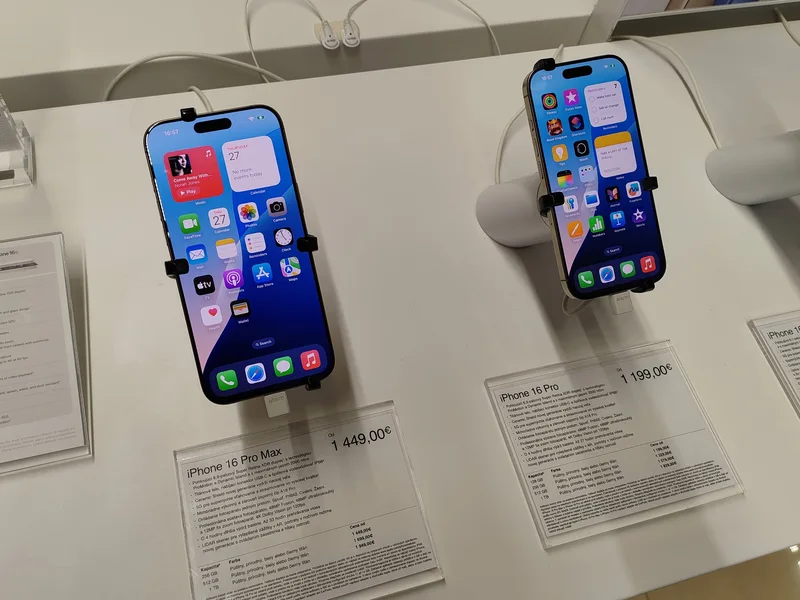
For anyone who has ever hesitated to leave iPhone for Android, or vice versa, because of how much worse group texts would look, RCS meaningfully lowers that friction. Mixed-device families and friend groups no longer need to split into a separate WhatsApp or Signal group chat just to get decent photo quality and reliable delivery; the default Messages app on either platform now handles that reasonably well, provided both people have RCS enabled, which is generally the default going forward but can be checked in each platform's messaging settings. It's a genuinely useful upgrade to think about alongside other cross-ecosystem factors that affect how painful or painless switching phones actually is, similar to how eSIM makes switching carriers or phones less of a hassle than it used to be. It doesn't erase every difference between iPhone and Android messaging, and anyone weighing a switch, including from a phone like the iPhone 16 Pro to a flagship Android device, should still expect a few rough edges around encryption and Apple-specific features. But the core annoyance that defined cross-platform texting for over a decade, blurry photos and broken group chats, is largely gone.
RCS won't make the green bubble blue, and Apple clearly intends to keep that visual distinction. What it has done is make the conversation happening inside that green bubble function like a real modern messaging experience rather than a compatibility fallback, which is the part that was actually broken. Combined with how much easier network switching has become thanks to eSIM and RCS's own rollout continuing to expand to more carriers and regions, cross-platform texting in 2026 looks nothing like it did even a couple of years ago, even if the two platforms still aren't fully unified, and even as networks continue rolling out the underlying data connections that both SMS fallback and RCS ultimately rely on to reach the other phone reliably.